
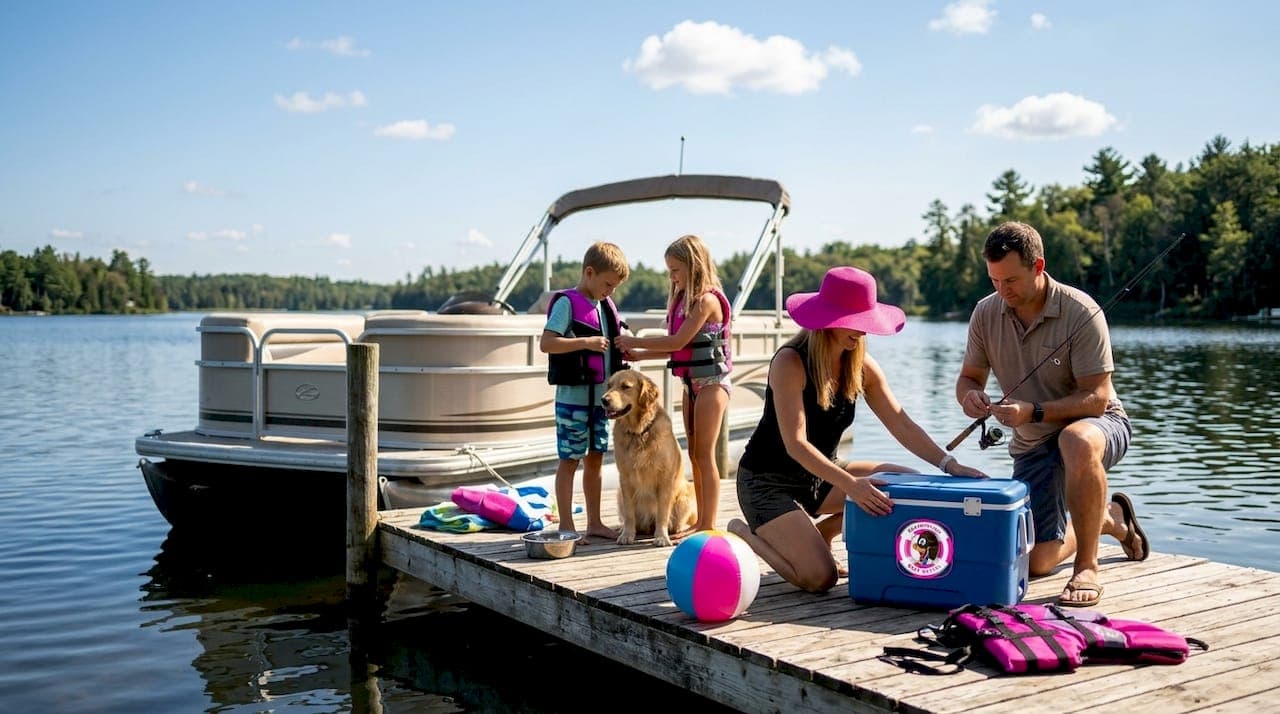
If you've been scrolling through boat rental options and wondering what is a pontoon boat exactly, you're not alone. Most people picture a traditional hull slicing through waves. A pontoon is something different. It rides on hollow metal tubes instead of a pointed hull, creating a flat, open platform that feels more like a floating deck than a conventional boat. That single design choice changes everything about how the boat handles, who it fits, and what you can do on it.
Table of Contents
- Key takeaways
- What is a pontoon boat and how it's built
- Engines, features, and what you'll find onboard
- Advantages and disadvantages worth knowing
- Popular activities pontoons are built for
- Handling basics and water etiquette
- My honest take on pontoon boats
- Try a pontoon rental with Roadrunnerboatrental
- FAQ
Key takeaways
| Point | Details |
|---|---|
| Unique buoyancy system | Pontoons float on two or three hollow metal tubes, not a traditional V-shaped hull. |
| Exceptional stability | The flat deck design makes pontoons ideal for groups, calm waters, and social activities. |
| Versatile engine options | Outboard motors from 50 to 300 horsepower cover everything from leisurely cruising to tubing. |
| Best for calm water | Pontoons excel on lakes, rivers, and intracoastal waterways rather than rough open ocean. |
| Handling requires adjustment | New operators need to account for wider turns and wind sensitivity compared to V-hull boats. |
What is a pontoon boat and how it's built
The defining feature is right in the name. A pontoon boat gets its buoyancy from two or three hollow metal tubes running the length of the boat underneath the deck. Those tubes are the pontoons. Fill a conventional boat with enough people and gear, and the hull dips lower into the water. A pontoon spreads that weight across two or three large-diameter tubes, keeping the deck level and steady regardless of load.
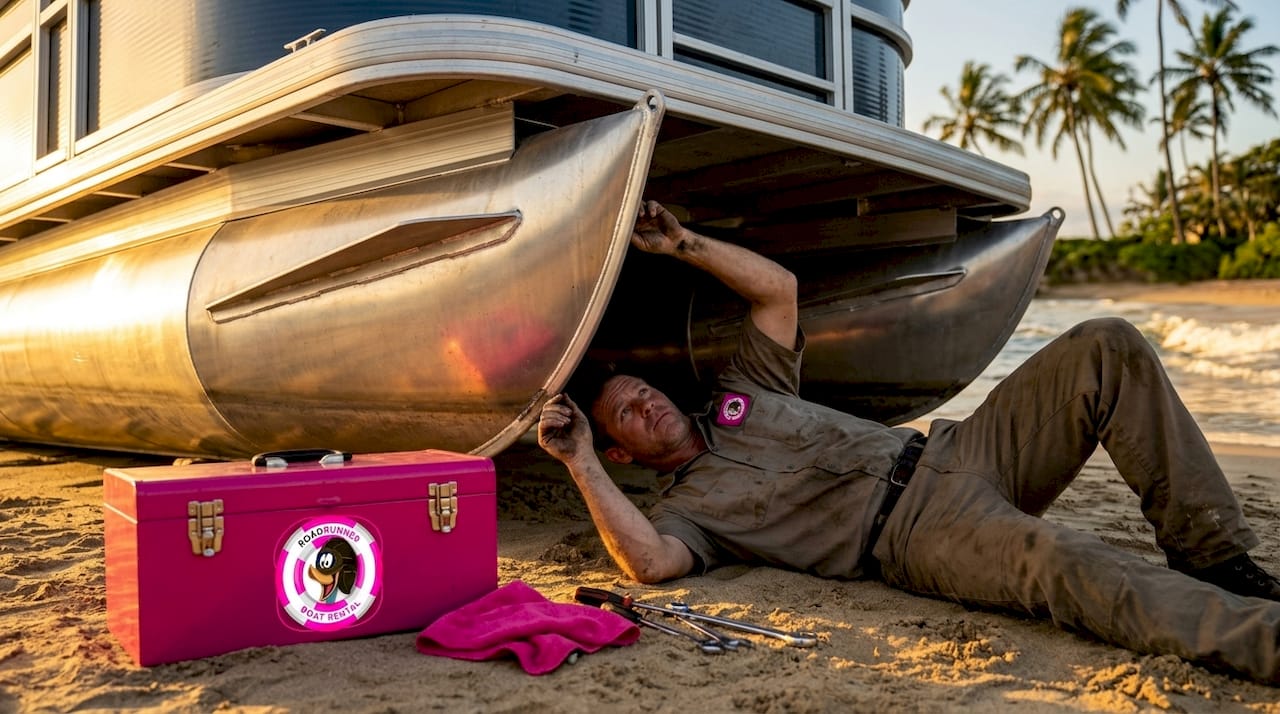
A standard pontoon uses two tubes and works well for cruising, fishing, and everyday family outings. A tritoon adds a third center tube between the two outer ones. That extra contact point with the water raises the performance ceiling, improves cornering under load, and allows operators to run higher horsepower engines without the hull feeling unstable. If you plan to pull a tube or a skier, a tritoon handles that stress far better than a two-tube setup.
| Feature | Standard pontoon | Tritoon |
|---|---|---|
| Tube configuration | Two tubes | Three tubes |
| Typical horsepower range | 50 to 150 hp | 150 to 300 hp |
| Load capacity | Moderate | High |
| Towing capability | Light duty | Strong |
| Handling in turns | Adequate | Confident |
| Best use case | Casual cruising, fishing | Performance, large groups |
The flat deck itself is also worth noting. Unlike a V-hull, which has a narrow walkable space between gunwales, a pontoon deck can be configured almost any way you want. Furniture, a sun lounger section, a fishing station, a changing room. The open floor plan is a feature, not just a side effect.
Pro Tip: If you are renting a pontoon and the listing specifies whether it's a standard or tritoon, choose the tritoon for larger groups or any water activities that involve towing. The added stability under a full passenger load makes a real difference.
Engines, features, and what you'll find onboard
Outboard motors are by far the most common engine choice on pontoon boats. They mount on the back of the boat, sit outside the hull, and offer straightforward access for maintenance. Horsepower ranges from about 50 on smaller recreational models up to 300 on performance tritoons. The ease of outboard maintenance makes them a practical fit for pontoons that see a wide range of operators, from first-timers to seasoned boaters.
When it comes to fuel costs, outboard engines on pontoons are generally reasonable for casual use. A 90 horsepower motor cruising at moderate speeds burns roughly 4 to 6 gallons per hour. Push up to a 200 horsepower tritoon running hard, and that number climbs. For a half-day rental, most people see fuel costs land somewhere between $30 and $80 depending on how far they travel and how aggressively they throttle up.
Here's what you typically find on a well-equipped rental or consumer pontoon:
- Seating layouts with bow lounge sections and wraparound rear seating for groups
- Sun loungers or convertible furniture that let passengers recline or reposition
- Changing room enclosures on larger models, useful for full-day outings
- Bluetooth audio systems for entertainment on the water
- Cooler space and built-in storage under seats and in bow sections
- LED lighting packages for evening cruises
- Swim ladders mounted at the stern for easy water entry and exit
- Fishing rod holders and live wells on purpose-built fishing configurations
Pro Tip: Match engine horsepower to your expected passenger load and activities. Underpowered pontoons under heavy load handle sluggishly and reduce your ability to maneuver safely. If you're renting for a larger party, always ask the rental company whether the engine is appropriately sized for the passenger count you're bringing.
Advantages and disadvantages worth knowing
Every boat design involves tradeoffs. Pontoons make specific choices that benefit certain users and limit others. Here's the honest breakdown.
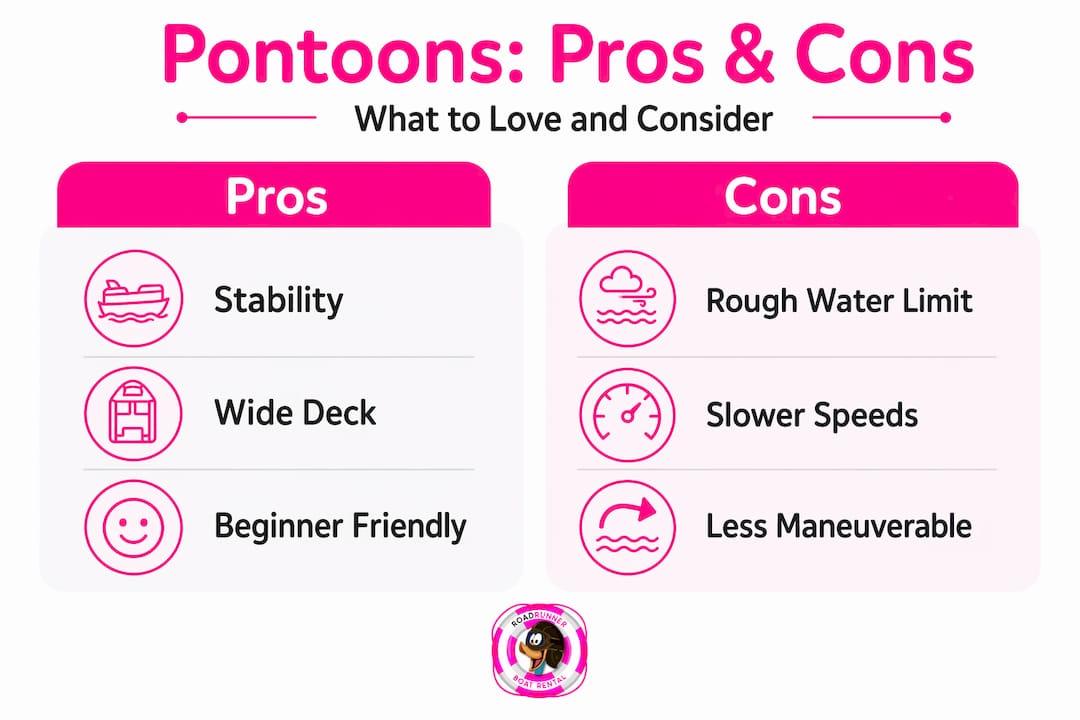
The biggest advantage is stability. The flat deck platform makes pontoons exceptionally steady, which matters enormously when children are running around, when someone is fishing off the bow, or when you're passing food and drinks at anchor. Typical rentals comfortably accommodate up to 15 people, and that capacity stays manageable because the deck doesn't rock or tip the way a narrow hull boat would.
The clearest limitation is rough water performance. Pontoons perform best on calmer inland waters rather than open ocean swells. The flat deck design that prioritizes comfort actually works against the boat in choppy conditions. Waves hit the underside of the deck, creating a jarring, wet ride that a V-hull would slice through cleanly.
| Pros | Cons |
|---|---|
| Exceptional stability on flat water | Poor performance in rough or open ocean water |
| Large passenger capacity | Lower top speeds than V-hull boats |
| Spacious, customizable deck layout | More affected by wind when docking |
| Easy for new operators to learn | Requires wider turns and earlier planning |
| Comfortable for long outings | Not ideal for ocean fishing or offshore trips |
Safety is also worth addressing directly. Stability does not eliminate risk. Life jackets remain required for all passengers under Florida law, and the same principles of responsible operation apply regardless of how steady the platform feels. Overloading a pontoon is one of the most common mistakes new users make, and it affects both performance and safety.
Popular activities pontoons are built for
The social orientation of a pontoon's deck design makes it the right tool for a specific list of activities. Knowing what the boat does well helps you plan a better day on the water.
- Group cruising and sightseeing. The large deck accommodates families and friend groups without anyone feeling cramped. Intracoastal routes, lake loops, and sandbar stops are where pontoons genuinely shine.
- Swimming and water access. The stern swim ladder and low freeboard make getting in and out of the water simple. This is one of the biggest practical advantages over higher-sided boats.
- Tubing and light watersports. With the right engine, particularly a tritoon configuration, pontoons tow tubes, wakeboards, and skiers effectively. Check with your rental company on horsepower before assuming towing is available.
- Fishing. Flat decks give anglers room to move and cast without getting in each other's way. Many fishing-specific pontoons include rod holders, live wells, and elevated front casting decks.
- Entertaining and celebrations. Birthday parties, bachelorette outings, and casual get-togethers work well on pontoons because the space feels like a floating living room. Food, drinks, music, and people actually fit comfortably.
Pro Tip: For top South Florida activities on a pontoon, plan around the boat's strengths. Anchor at a sandbar for swimming, then cruise back in the afternoon. That pattern fits what pontoons do well and gives your group the most enjoyable day possible.
Handling basics and water etiquette
Understanding how a pontoon responds is critical before you throttle up for the first time. The handling feels different from a V-hull, and that surprises many first-time operators.
Pontoons require wider, earlier turns than traditional boats. The flat hull doesn't bite into the water the way a V-shape does, so the boat carries more forward momentum through corners. New operators who wait too long to start a turn regularly overshoot docks and channels. Start your turns earlier than feels necessary, and you'll find your timing improves quickly.
Wind also affects pontoons more noticeably than hulls that sit deeper in the water. Wind and waterway geometry influence handling more than throttle power alone, particularly during docking. On a breezy day, approach your dock from an angle that keeps the wind helping you rather than pushing you sideways.
Key etiquette and safety points every operator should follow:
- Slow down near swimmers, kayakers, and anchored boats. Your wake affects people in smaller watercraft far more than it affects you.
- Observe no-wake zones strictly. Florida waterways have marked no-wake areas that protect both wildlife habitat and other boaters.
- Keep passengers seated when accelerating and during sharp turns. Stability doesn't mean passengers can't fall.
- All passengers need life jackets accessible and sized correctly. Children under six must wear them at all times on Florida waters.
- Communicate before docking. Let your passengers know when you're approaching the dock so they can prepare to assist with lines rather than leaning out unexpectedly.
My honest take on pontoon boats
I've spent a lot of time around different boat types, and I'll be direct about something most enthusiast reviews won't say clearly: pontoon boats are not the compromise choice. People often treat them that way, as if choosing a pontoon means you couldn't afford something faster or more exciting. That framing misses the point entirely.
For a family with kids, a group of friends celebrating a birthday, or anyone who wants to spend a full day on the water without exhaustion, the spacious, stable deck of a pontoon delivers something a speedboat simply cannot. Speed is easy to find. Room to move, breathe, eat lunch, fish, and actually talk to the people you came with is harder to come by.
The flat deck orientation that prioritizes comfort over wave-cutting is a deliberate design choice, not a limitation. When I see first-time renters choose a pontoon for a group outing at Lake Boca or the Intracoastal, they almost always leave wishing they'd done it sooner. The boat fits the experience they were actually after.
My practical advice: if you're considering buying or renting, think about what your typical day on the water actually looks like. If it involves more than two people, any kids, fishing, or swimming, a pontoon fits that day better than almost anything else in the same price range. Speed you can rent for an hour. Space you can live with all day.
— Cristiano
Try a pontoon rental with Roadrunnerboatrental
If you've been considering a pontoon but aren't ready to commit to ownership, renting first is the smartest move you can make. Roadrunnerboatrental offers pontoon boat rentals in Boca Raton on Lake Boca and the Intracoastal, with clean, reliable boats and a straightforward booking process. There's no complicated membership or marina fees. You pick your date, reserve directly, and show up ready to enjoy the water.
Whether you're organizing a birthday outing, a family trip, or a sandbar afternoon with friends, Roadrunnerboatrental has options that fit. For larger groups looking for a full party boat experience in Boca Raton, the fleet covers that too. Deerfield Beach, Delray Beach, and Pompano Beach are all within easy reach from the launch point. Book directly at roadrunnerboatrental.com and put a pontoon day on your calendar before the season fills up.
FAQ
What makes a pontoon boat different from other boats?
A pontoon boat floats on two or three hollow metal tubes rather than a traditional V-shaped hull, creating a flat, wide deck that prioritizes stability and passenger space over speed or rough water performance.
How many people can a pontoon boat hold?
Most recreational pontoons accommodate between 10 and 15 passengers comfortably, with larger tritoon models capable of handling more weight while maintaining stable handling.
Are pontoon boats safe for beginners?
Yes. Pontoons are among the most beginner-friendly boats on the water due to their stability and forgiving handling, though new operators should practice wider turns and account for wind when docking.
What kind of engine does a pontoon boat use?
Outboard motors are standard on pontoon boats, typically ranging from 50 to 300 horsepower depending on boat size and intended use, from casual cruising to towing watersports equipment.
Can you use a pontoon boat in the ocean?
Pontoons are not well suited for open ocean conditions. They perform best on calm inland waters like lakes, rivers, and intracoastal waterways where their flat deck design delivers maximum comfort and stability.