
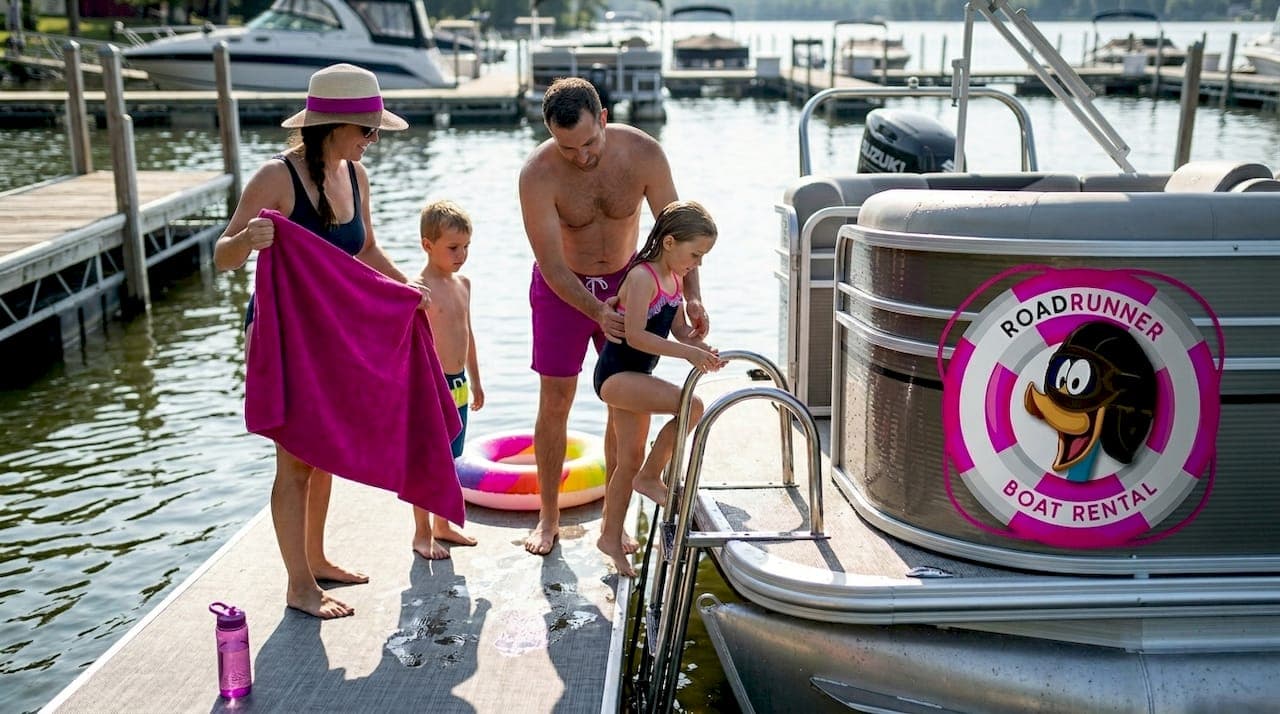
Most people step onto a pontoon boat, spot the flat deck at the back, and assume that's the swim area sorted. It's not. The pontoon boat swim area is the combination of that stern platform and the ladder attached to it, and understanding how both work together is what separates a safe, fun family swim day from a stressful one. If you're planning a rental on Lake Boca, the Intracoastal, or a nearby sandbar, knowing these details before you leave the dock makes a real difference.
Table of Contents
- Understanding the pontoon boat swim area and its components
- How pontoon boat ladders enhance swim area safety and comfort
- Essential pontoon swim area safety rules for families
- Choosing the right pontoon swim area features for your Boca Raton adventures
- Maximizing your family's swim area experience on Boca Raton pontoon rentals
- Why understanding pontoon swim areas changes your family's water day for the better
- Explore Boca Raton pontoon boat rentals with safe swim areas
- Frequently asked questions
Key Takeaways
| Point | Details |
|---|---|
| Swim area components | A pontoon swim area includes both the swim platform and ladder for safe water entry and exit. |
| Ladder step depth | Having the bottom ladder step at least 12 inches below waterline makes reboarding easier and safer. |
| Engine-off rule | Always turn off the boat’s engine before swimmers enter or exit the water to prevent injuries. |
| Safety monitoring | Designate a swim spotter to track swimmers and coordinate safe swim sessions. |
| Feature matching | Choose ladder and swim platform features based on water depth and family needs for best experience. |
Understanding the pontoon boat swim area and its components
The phrase "swim area" gets used loosely, and that causes confusion. Many renters treat the swim platform as the destination. But the swim area is the full entry-and-exit zone for swimmers, which means the stern platform plus the ladder plus the open water directly behind the boat. All three parts work as a system.
The swim platform itself is a level surface positioned at or near the stern, raised slightly above the waterline. Its job is to give swimmers a stable staging area before they descend into the water. Without a ladder, though, that platform is essentially a balcony with no stairs. The ladder is what makes the swim area actually functional, especially for children, older family members, or anyone who's been treading water for a while and needs a reliable path back onto the boat.
Here's what a complete pontoon boat swim area typically includes:
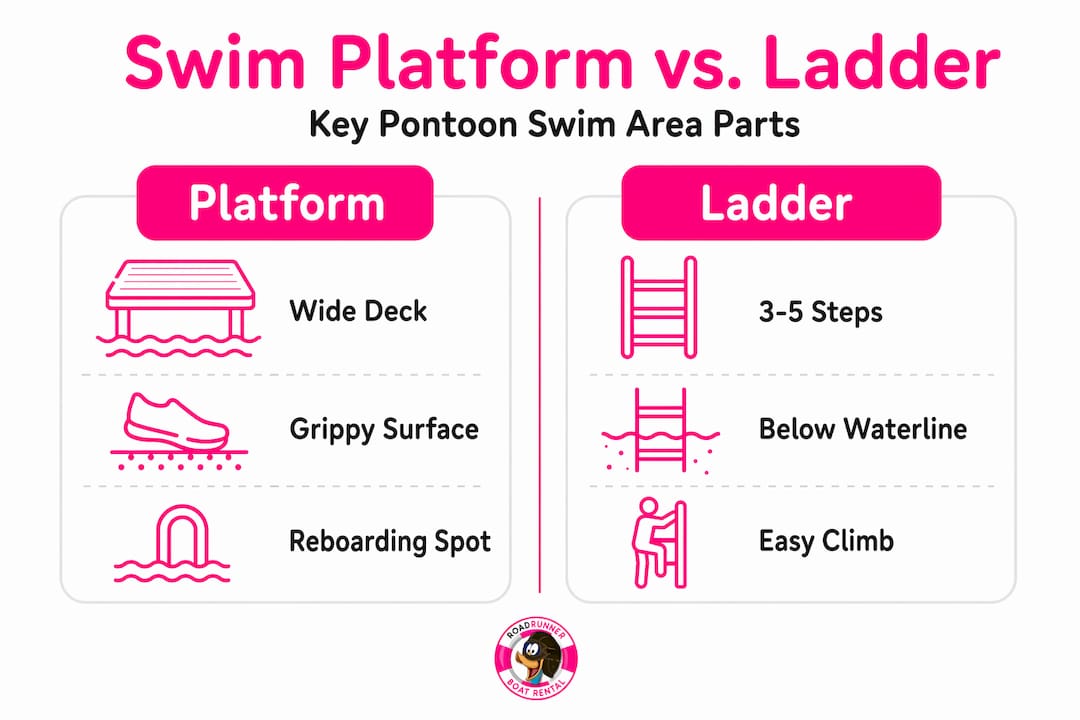
- Stern swim platform: A flat, non-slip surface at the back of the boat that acts as the gathering point for swimmers before and after getting in the water.
- Integrated ladder: Usually folds down into the water, allowing swimmers to descend and reboard step by step rather than hauling themselves up by arm strength alone.
- Clearance zone in the water: The open area directly behind the stern where active swimming takes place, away from the hull and any mechanical equipment.
- Safety rails or grab handles: Often found on either side of the platform to assist with balance when stepping onto or off the ladder.
For safe pontoon boarding and reboarding, the platform and ladder must work in harmony. A wide, grippy platform does very little if the ladder is too short, too narrow, or awkwardly placed. That combination matters more than either component alone.
How pontoon boat ladders enhance swim area safety and comfort
Ladders are the most underrated part of the entire swim area setup. Most families just check that a ladder exists. The right question is whether that ladder is actually designed for the kind of swimming your family plans to do.
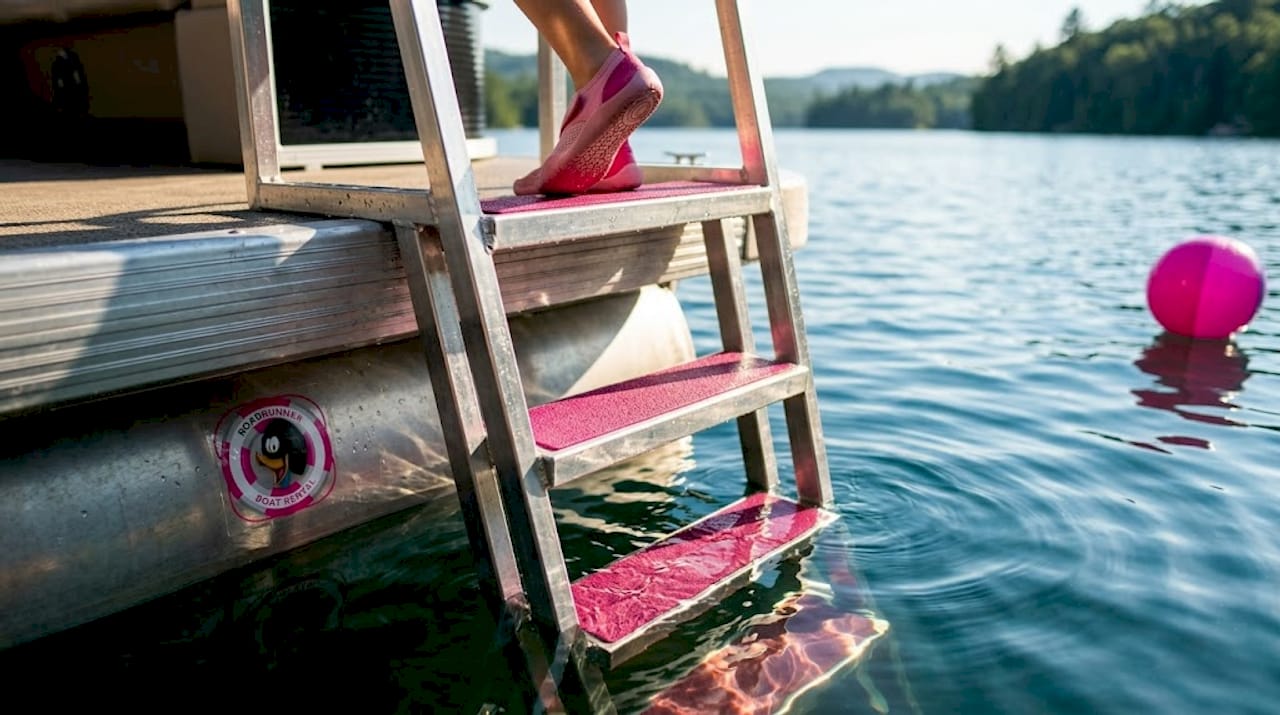
Most pontoon ladders run 3 to 5 steps, and the bottom step should sit at least 12 inches below the waterline. That lower positioning is critical because it gives swimmers solid footing before they attempt the full climb. Without it, the first step feels like a pull-up bar rather than a step.
Here's a quick comparison of ladder types by use case:
| Ladder type | Step count | Best for | Water depth suitability |
|---|---|---|---|
| Compact fold-down | 2-3 steps | Calm, shallow coves | Under 4 feet |
| Standard rear-entry | 3-4 steps | General family use | 4 to 7 feet |
| Extended deep-water | 4-5 steps | Intracoastal, open water | 7 feet and deeper |
| Wide-tread rear-entry | 3-5 steps | High-traffic family groups | All depths |
Key ladder features that directly affect safety and comfort:
- Step width: Wider steps (at least 8 inches) reduce slipping and accommodate more foot sizes.
- Rung material: Aluminum with rubberized grip outperforms bare stainless steel, which gets slippery when wet.
- Mounting angle: Ladders angled slightly away from the hull allow more natural body positioning when climbing.
- Weight rating: Always confirm the ladder supports the heaviest member of your group, not just average adult weight.
Pro Tip: Before your family enters the water for the first time, have one adult test the ladder by climbing in and out fully loaded, meaning wet clothing and all. This reveals any wobble, loose bolts, or insufficient reach before kids are depending on it.
Fun pontoon swim activities are far more enjoyable when reboarding feels effortless rather than exhausting. A good ladder makes repeated swims feel easy instead of like a gym workout.
Essential pontoon swim area safety rules for families
Ladder quality means nothing if the safety protocols around the swim area aren't followed. These rules aren't suggestions. They're the difference between a great day and a dangerous one.
- Engine off, always. Before any swimmer enters or exits the water, the engine must be completely shut down. This is the single most important rule in recreational pontoon boating safety. Even an idling engine poses serious propeller risk.
- Assign a dedicated swim spotter. This person does not swim. Their only job is to watch the water, count heads, and communicate with the person at the helm. One designated set of eyes prevents every major swim-related incident.
- Establish a clear entry and exit sequence. Swimmers call out when they're entering and when they're back aboard. No guessing, no assumptions.
- Keep the swim zone defined. Swimmers stay behind the stern, never around the sides or forward of the pontoons where visibility is limited.
- Confirm all swimmers can handle the ladder independently or have a dedicated helper. Children under 8 and seniors should always have a hand-over-hand assist.
"The engine must be OFF before anyone enters the water. Assign a spotter to count heads. These are non-negotiable practices for any family using a pontoon swim area."
Pro Tip: Create a simple two-word call system for your group. "Going in" and "I'm up" are short enough that anyone can shout them across the water. It keeps your spotter's count accurate without requiring constant verbal updates.
For anyone unfamiliar with pontoon safe boarding protocols, reviewing those guidelines before you get on the water pays off immediately. And if you're searching for the right pontoon boat rental in Boca Raton with proper safety equipment, confirming these features upfront is the smart move.
Choosing the right pontoon swim area features for your Boca Raton adventures
Boca Raton's waters aren't uniform. Lake Boca runs shallow in spots. The Intracoastal gets significantly deeper. Open sandbars offer very different conditions than protected coves. Each environment calls for a different ladder and platform setup.
| Location | Typical depth | Recommended ladder steps | Platform type |
|---|---|---|---|
| Lake Boca sandbars | 2 to 5 feet | 2-3 steps | Standard flat stern |
| Intracoastal Waterway | 6 to 12 feet | 4-5 steps | Wide rear-entry with grab rails |
| Protected coves and inlets | 3 to 7 feet | 3-4 steps | Standard or wide-tread |
The Lippert guidance is clear: ask about ladder step depth before you book, not just whether a ladder exists. A 2-step compact ladder that works fine at a shallow Lake Boca sandbar will frustrate your entire group if you're anchored in 9 feet of Intracoastal water.
Here's what to look for when evaluating a rental's swim area for Boca Raton conditions:
- Rear-entry ladder placement: Easier access than side-mount for groups of 4 or more.
- Wide step treads: Especially important for kids who exit the water with wet, tired legs.
- Non-slip platform surface: Critical on South Florida's sun-heated decks, which dry quickly but stay slippery when wet feet hit them.
- Handrails at the ladder top: These help with the final step from water onto the platform, which is the most awkward transition in the whole sequence.
For family boat rentals in Boca Raton that include sandbar stops, the best experiences come from boats equipped for exactly that kind of use. If you're planning Lake Boca sandbar trips, confirm ladder length before you go so the day unfolds smoothly from the first jump in.
Maximizing your family's swim area experience on Boca Raton pontoon rentals
Knowing the swim area's components and safety rules is step one. Running a smooth, enjoyable family swim session is the actual goal. Here's how to get there.
- Brief the group before leaving the dock. Five minutes of expectations on the water prevents ten minutes of confusion during active swimming.
- Rotate your swim spotter every 30 minutes. Attention drifts. Fresh eyes catch things tired eyes miss.
- Have kids practice the ladder before anyone swims. A dry run on land or from the platform while the boat is stationary removes first-time hesitation in the water.
- Keep a flotation device within arm's reach of the swim area at all times. Not stored below. Actually within reach.
- Stage reboarding so two kids aren't on the ladder simultaneously. One up, one waiting on the platform step. It avoids ladder collisions and unnecessary shaking.
The safest swim area workflow keeps one person as dedicated swim spotter with the engine off the entire time anyone is in the water. This isn't negotiable, and it's not overly cautious. It's just how responsible families run their swim sessions.
Pro Tip: Assign older kids a "junior spotter" role when they're not swimming. It keeps them engaged, teaches responsibility, and gives your lead spotter a second pair of eyes. Kids take the job seriously when it feels official.
For ideas on making the most of your day out, check out the full list of things to do on pontoon boats in Boca Raton. The swim area is just one highlight of a well-planned boat day.
Why understanding pontoon swim areas changes your family's water day for the better
Here's the thing most families miss: surface area does not make a swim area safe. A beautiful wide stern deck with a short, poorly positioned ladder is more dangerous than a modest platform with a well-designed 4-step rear-entry ladder. The platform is the stage. The ladder is the mechanism that makes swimming actually accessible and repeatable.
Ladder integration is what makes the swim area practically usable for everyone, not just strong adult swimmers who can hoist themselves over the rail. That point matters enormously when your group includes a 6-year-old, a grandparent, or anyone who tires quickly in the water.
We've seen this play out on Boca Raton rentals repeatedly. Families who understand their swim area before they anchor tend to stay longer, swim more, and leave the water on their own schedule. Families who don't often cut swim time short because reboarding is harder than expected, someone got nervous on the ladder, or the engine got started at the wrong moment.
The swim area is a controlled safety zone. Treating it that way, with a designated spotter, a clear protocol, and the right ladder geometry for the water you're in, turns a potentially stressful part of the day into the best part. Why pontoons suit families is partly about comfort and space, but the real reason runs deeper. A well-designed swim area gives every member of your group, regardless of age or ability, a confident and independent experience in the water. That changes the emotional tone of the entire outing.
Explore Boca Raton pontoon boat rentals with safe swim areas
Ready to put all of this into practice on Boca Raton's beautiful waters? Roadrunner Boat Rental offers Boca Raton pontoon rentals with integrated swim platforms and ladders built for real family use, not just checkbox compliance.
Our family-friendly boat rentals are clean, reliable, and equipped with the swim area features that matter most for Lake Boca sandbars, Intracoastal cruising, and everything in between. Book directly online, and we'll point you to the best local swim spots that match your group's ages and swimming comfort levels. Visit Roadrunner Boat Rental and get your family's perfect water day on the calendar.
Frequently asked questions
What exactly is the swim area on a pontoon boat?
The swim area is the dedicated entry-and-exit zone at the stern, including the swim platform and the ladder where swimmers safely enter and exit the water.
How many ladder steps should a pontoon boat have for family swimming?
Most pontoon ladders have 3 to 5 steps, and the bottom step should sit at least 12 inches below the waterline for safe, comfortable reboarding.
What are the key safety rules when using the swim area?
Always shut off the engine before anyone enters or exits the water, and assign a dedicated swim spotter to track every swimmer at all times.
Can the wrong ladder design affect swimming safety?
Yes. A ladder too short leaves swimmers with poor footing on the first step, making reboarding harder and riskier, especially for children and older adults.
Are pontoon swim areas suitable for kids and older family members?
Absolutely. Integrated ladders with proper step depth and grab rails make the swim area accessible and safe for all ages, including young children and seniors.