
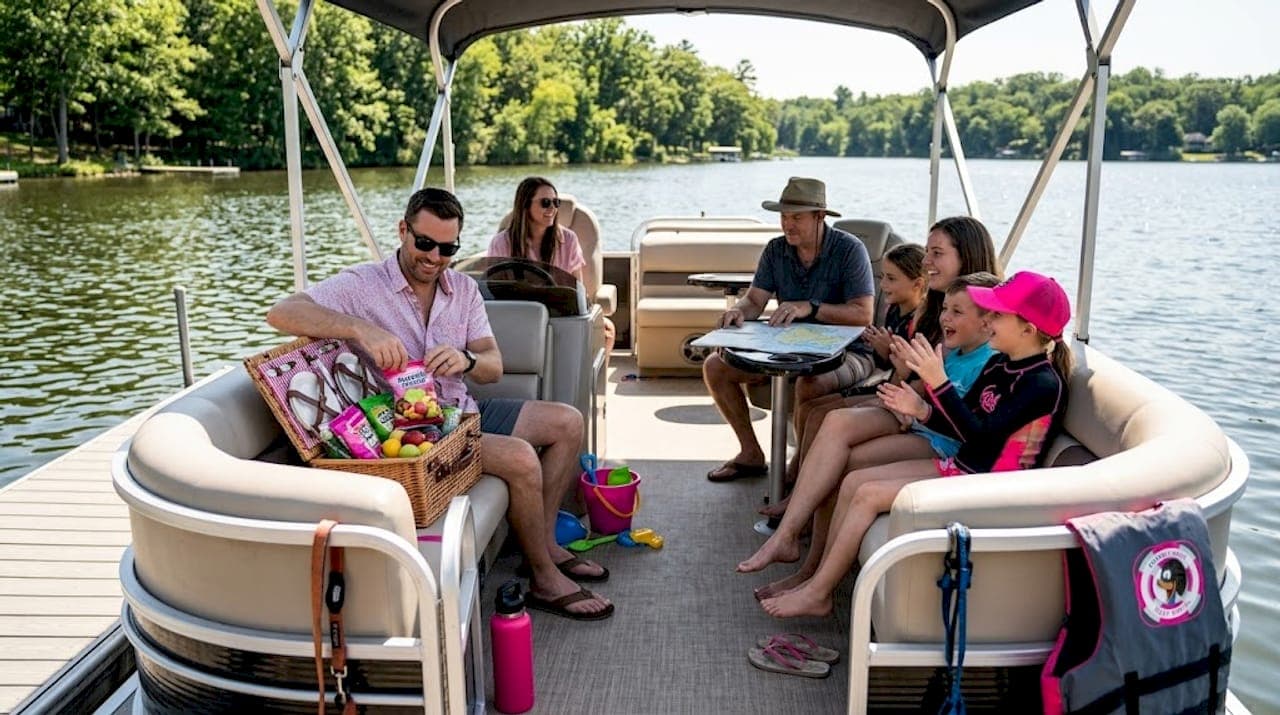
When you're planning a day on the water, the question of why choose pontoon over speedboat trips up a surprising number of people. Speedboats look exciting. They photograph well. But for most leisure renters, they deliver a very different experience than expected once you factor in group size, comfort, fuel costs, and what you actually want to do on the water. This guide breaks down the real differences between these two boat types so you can make a confident, informed choice before you book.
Table of Contents
- Key takeaways
- Why choose pontoon over speedboat: the design tells the story
- Capacity, comfort, and the social experience
- Performance and fuel efficiency compared
- Activity suitability: which boat fits your day?
- Cost and maintenance considerations for renters
- My take on which boat most renters actually need
- Plan your day on the water with Roadrunnerboatrental
- FAQ
Key takeaways
| Point | Details |
|---|---|
| Pontoons carry more people | A 22-foot pontoon fits 10 to 12 passengers comfortably versus 6 to 8 on a speedboat of similar length. |
| Stability matters for families | Flat-deck pontoons reduce motion anxiety for children and elderly passengers compared to V-hull rides. |
| Fuel costs run much lower | Pontoons burn roughly 4 to 6 gallons per hour versus 10 to 14 for a speedboat at cruising speed. |
| Speedboats excel at high-speed thrills | If wakeboarding or fast runs are your priority, speedboats hold a clear speed advantage. |
| Match boat type to your actual plans | Pontoons win for social outings and relaxed cruising; speedboats suit smaller, adrenaline-focused groups. |
Why choose pontoon over speedboat: the design tells the story
The biggest difference between these two boats has nothing to do with horsepower. It starts with the hull.
A pontoon boat sits on two parallel aluminum tubes called pontoons, which create a wide, flat deck that rides on top of the water rather than slicing through it. That design trades raw speed for an enormous usable surface. You get open space, wraparound seating, and a platform that stays stable even when passengers move around. Tritoon models add a third tube in the center, and some come with performance upgrades like lifting strakes that noticeably improve handling and allow for more watersports capability than a standard pontoon.
A speedboat uses a V-hull, which is shaped to cut into the water and redirect it sideways as the boat accelerates. That design is purpose-built for speed and maneuverability in rougher conditions. The tradeoff is a narrower, lower deck with bucket seats, limited storage, and a ride that feels every wave.
How water conditions shape the choice
Pontoons perform best on calm inland lakes, rivers, and protected intracoastal waterways. They handle light chop adequately but can feel sluggish in open ocean conditions with significant swell. One nuance worth knowing: pontoons require a wider turning radius and more anticipatory docking compared to speedboats, which maneuver tightly in confined marina spaces. For spots like Lake Boca and the Intracoastal, that wider turn is rarely a problem.
Speedboats handle varied water conditions more aggressively and stay composed at speed in moderate chop. If you're heading somewhere with more open exposure and you want to run fast, a speedboat's hull will feel more planted.
| Feature | Pontoon | Speedboat |
|---|---|---|
| Hull type | Twin or triple aluminum tubes | V-hull |
| Typical deck space | Wide open platform | Narrow, sport-focused |
| Ideal water conditions | Calm inland lakes, intracoastal | Open water, moderate chop |
| Maneuverability | Wider turning radius | Tighter handling |
| Primary strength | Comfort and capacity | Speed and agility |
Capacity, comfort, and the social experience
This is where the advantages of pontoon boats become impossible to ignore for most leisure renters.
A 22-foot pontoon accommodates 10 to 12 passengers comfortably, while a speedboat of similar length fits 6 to 8 at most. That gap matters enormously when you're booking for a birthday, a family reunion, or a group of friends celebrating a bachelorette party. On a pontoon, everyone has a seat, a view, and room to move. On a speedboat, someone is always squeezed.
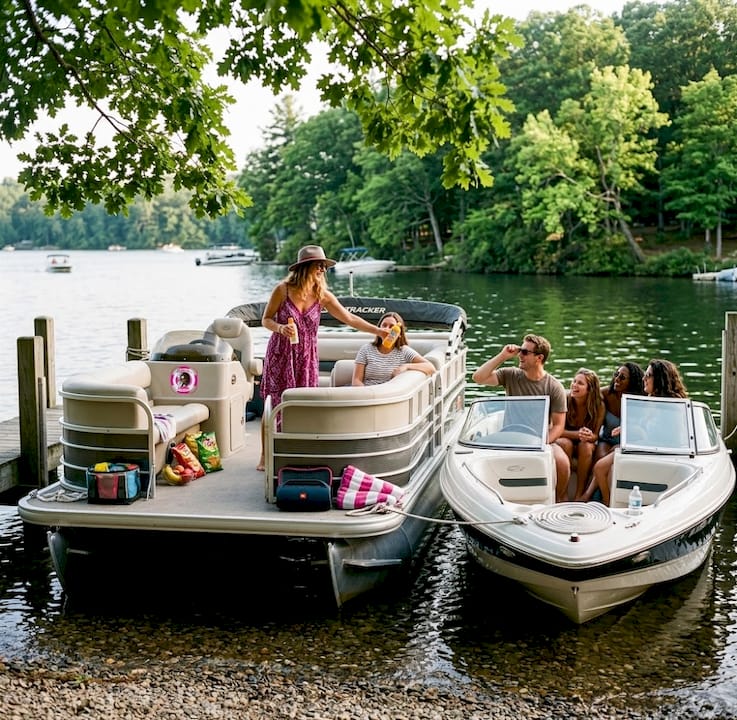
The seating layout difference goes deeper than just numbers. Pontoons typically feature wraparound lounge-style seating where passengers face each other, which naturally encourages conversation. Some newer pontoon models use quad-seat arrangements that offer more individual personal space while still supporting a social atmosphere. Speedboats arrange passengers in a single-file or bucket-seat format, oriented forward. You're watching the horizon instead of talking to your friends.
For families, the stability difference is significant. A flat pontoon deck reduces motion anxiety for children and elderly passengers in ways a rocking V-hull simply cannot match. Kids can walk around safely. Grandparents can sit comfortably without gripping a handle the entire ride. That peace of mind is worth a lot on a day that's supposed to be relaxing.
Here are the core comfort differences at a glance:
- Passenger capacity: Pontoons hold 10 to 12; speedboats hold 6 to 8 on similar-length hulls
- Seating style: Pontoon lounge seating promotes face-to-face socializing; speedboat seats face forward
- Deck mobility: Pontoon guests walk around freely; speedboat passengers stay seated at speed
- Motion comfort: Flat pontoon deck absorbs less wave energy, making for smoother passenger experience
- Accessibility: Boarding and moving on a pontoon is easier for children, seniors, and non-swimmers
Pro Tip: If your group includes anyone who gets seasick or who hasn't been on a boat before, a pontoon is almost always the right call. The stability for non-boaters makes the whole day significantly more enjoyable for everyone.
Performance and fuel efficiency compared
Speed is the one category where speedboats win without argument. Pontoons cruise comfortably between 18 and 30 mph, while speedboats push well past 50 to 60 mph depending on engine size. For waterskiing, competitive wake riding, or simply the feeling of flying across open water, speedboats deliver an experience pontoons cannot fully replicate.
But for most renters, that speed gap rarely matters in practice. Getting from one sandbar to another 3 miles away takes a few more minutes at pontoon speeds. You won't notice once you're anchored and swimming.
Fuel costs are a different story. Those do matter, and the gap is substantial.
| Speed | Pontoon fuel use | Speedboat fuel use |
|---|---|---|
| Cruising (~20 mph) | 4 to 6 gallons per hour | 10 to 14 gallons per hour |
| Higher speed runs | 8 to 12 gallons per hour | 20+ gallons per hour |
| Typical 4-hour rental impact | 16 to 24 gallons | 40 to 56 gallons |
Pontoons burn 4 to 6 gallons per hour at a comfortable 20 mph cruise, while a speedboat running at 35 mph consumes 10 to 14 gallons per hour. Over a four-hour rental, that difference can add up to double or triple the fuel cost. For rental operations, this affects pricing. For renters paying fuel overages, it hits the budget directly.
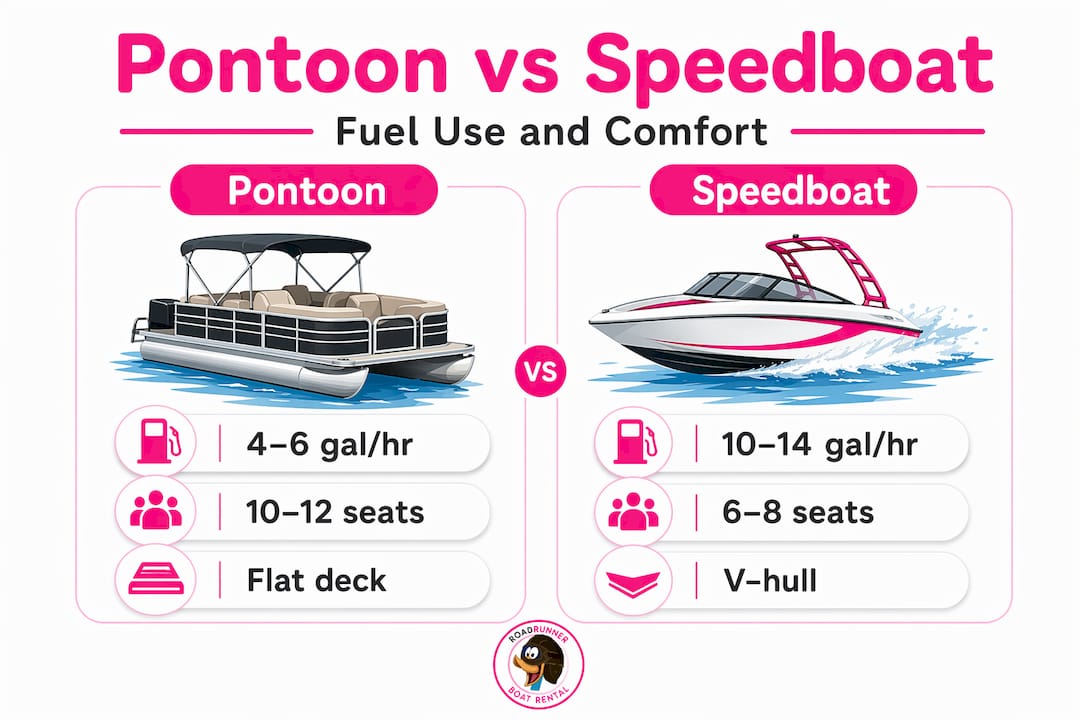
Load matters too. A full pontoon with 10 passengers and a cooler will cruise noticeably slower than with 4 people aboard. A speedboat running light and fast is where it performs best. Factor that in if your group is large.
Activity suitability: which boat fits your day?
The pontoon vs speedboat debate often comes down to one simple question: what are you actually planning to do?
Here is a practical breakdown based on common leisure activities:
- Relaxed cruising and sightseeing. Pontoons are better by a wide margin. The open deck, comfortable seating, and smooth ride make a two-hour cruise feel like a pleasant afternoon rather than an endurance test.
- Anchoring at a sandbar. Pontoons excel here. Leisure and social activities like anchoring and picnicking are what pontoons are designed for. You have space to set up food, play music, and let kids swim off the back.
- Swimming and snorkeling stops. Pontoons win again. The low deck and wide platform make entering and exiting the water easy and safe. Climbing back onto a speedboat at anchor is a more athletic undertaking.
- Tubing and light towing. A well-powered pontoon handles tubing capably, especially a tritoon with a performance package. Speedboats provide more pull and better wake for advanced riders.
- Wakeboarding and waterskiing. Speedboats hold the advantage for serious watersports. Their hull design and speed range are optimized for it.
- Fishing in calm water. Pontoons offer more deck space for rods, tackle, and lines without tangling. Their slow drift and stable platform suit casual fishing very well.
Pro Tip: If your group wants to do multiple activities during the day, including swimming, eating on board, and maybe some tubing, a pontoon boat rental gives you far more flexibility than a speedboat that excels at one thing.
Cost and maintenance considerations for renters
Most renters don't think about maintenance costs when they're choosing a boat. But these costs filter directly into rental pricing and the overall experience you get.
Pontoons are genuinely less expensive to maintain and insure than speedboats. Pontoons cost less to insure and maintain because their engines are lower-powered and their mechanical systems are more straightforward. Fewer high-performance components mean fewer points of failure and lower repair bills. That savings often shows up in more competitive rental pricing and better-maintained boats at the dock.
Speedboats run powerful engines designed for sustained high RPM output. Those engines require more frequent service intervals, more expensive parts, and carry higher insurance premiums because of the accident risk at speed. That's not a reason to avoid speedboats. It is a reason to understand what you're paying for and why.
Here's a quick summary of cost factors for renters to keep in mind:
- Pontoon fuel costs are roughly half those of comparable speedboats at cruising speeds
- Lower operating costs for rental companies can translate to better value per hour for you
- Speedboat rentals often carry stricter operator licensing requirements depending on the state
- Family boat rental packages are almost always designed around pontoons because of the cost and safety profile
My take on which boat most renters actually need
I've watched a lot of people make the speedboat choice and then spend half the trip sitting quietly because there's nowhere to go and nothing to do at anchor that couldn't be done better on a pontoon. The speedboat wins the "looks cool in a photo" category, no question. But when you factor in what a typical leisure day on the water actually involves, the pontoon wins almost every practical comparison.
The most common mistake I see is renters overestimating how much they'll care about top speed once they're out there. Getting somewhere fast sounds exciting in advance. Once you're on the water with your friends, the goal shifts quickly to finding a nice spot, putting down the anchor, and having a good time. A pontoon sets you up for that. A speedboat keeps you searching for the next fast stretch.
I also think people underestimate how much group dynamics matter. Nobody wants to be the person wedged into a back corner of a speedboat for three hours while other people talk up front. On a pontoon, everyone is part of the experience. That matters on a family boat rental day more than almost anything else.
My honest recommendation: unless your group is small, speed-focused, and genuinely planning to wakeboard or ski, book the pontoon. You'll be more comfortable, your guests will thank you, and you'll spend less on fuel.
— Cristiano
Plan your day on the water with Roadrunnerboatrental
At Roadrunnerboatrental, we offer clean, reliable pontoon rentals ideal for groups, families, and anyone who wants to make the most of Lake Boca, the Intracoastal, and South Florida's beautiful waterways. Our pontoons comfortably seat larger groups and come ready for a full day of cruising, swimming, and socializing. If you're leaning toward the speedboat experience for a smaller, high-energy outing, we can walk you through those options too.
Booking is simple and direct with no unnecessary steps. Check our current rental pricing to compare options and find what fits your budget. When you're ready to commit, reserve your boat online in just a few minutes. Whether it's a birthday on the water, a laid-back family day, or a group celebration, our team makes it straightforward to get out there and enjoy it. Explore all available options at Roadrunnerboatrental and start planning today.
FAQ
Why do most leisure renters choose a pontoon over a speedboat?
Most leisure renters choose pontoons because they accommodate larger groups, offer more deck space for socializing, and provide a smoother, more comfortable ride at typical cruising speeds. The benefits of pontoon boats become obvious once you factor in passenger count and what you actually plan to do on the water.
Can a pontoon boat do watersports like tubing?
Yes. A well-powered pontoon handles tubing capably, and tritoon models with performance packages can pull riders for wakeboarding too. For serious waterskiing or advanced wake riding, speedboats still hold an edge due to their speed range and hull design.
How much faster is a speedboat than a pontoon?
Speedboats reach 50 to 60 mph and beyond, while pontoons cruise comfortably between 18 and 30 mph. For most leisure outings on calm inland water, that speed difference has little practical impact on your day.
Is a pontoon safer for kids and elderly passengers?
Yes. The flat deck design significantly reduces motion anxiety and the risk of stumbling compared to a V-hull speedboat ride. Pontoon stability advantages make them the preferred choice for family boating and mixed-age groups.
How much more fuel does a speedboat use compared to a pontoon?
A speedboat burns roughly 10 to 14 gallons per hour at 35 mph, while a pontoon uses only 4 to 6 gallons per hour at 20 mph. Over a typical four-hour rental, that gap represents a substantial difference in operating cost.