
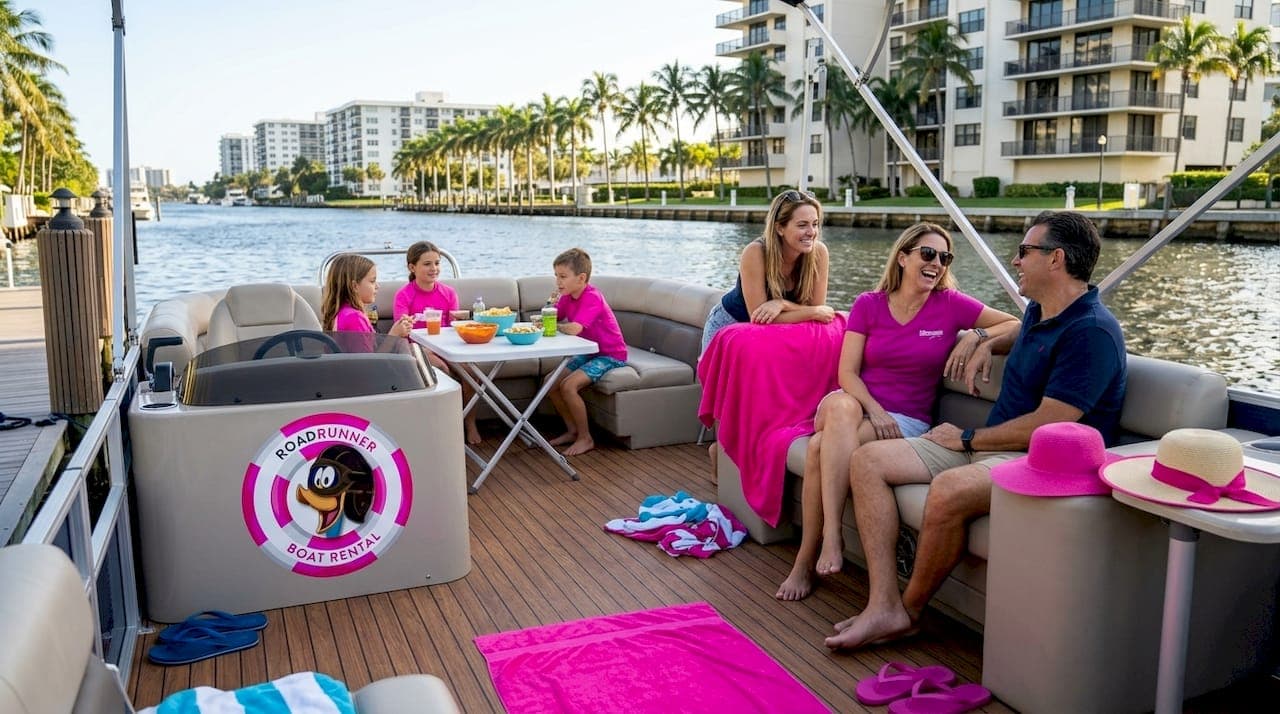
Most people who have never boated assume it requires serious skill, expensive training, or a high tolerance for rocking around on choppy water. That assumption keeps a lot of South Florida families off the water entirely. But understanding why pontoon is ideal for non-boaters changes the picture fast. Pontoon boats are built differently from the start — wider, flatter, more stable, and far more forgiving for first-timers. If you have been curious about getting out on Lake Boca, the Intracoastal, or a nearby sandbar but felt unsure where to start, this is exactly the guide you need.
Table of Contents
- Understanding pontoon boats: design and stability features
- Comfort and accessibility for families and non-boaters
- Pontoon performance on calm South Florida waters
- Comparing pontoons to traditional boats for non-boaters
- How to enjoy your first pontoon experience in South Florida
- Why many non-boaters find pontoons the best gateway to boating enjoyment
- Start your relaxed South Florida boating adventure with Roadrunner rentals
- Frequently asked questions
Key Takeaways
| Point | Details |
|---|---|
| Stable and safe | Pontoons use wide aluminum tubes to provide unmatched stability ideal for first-time boaters. |
| Family-friendly design | High railings and level decks make pontoons accessible and comfortable for all ages. |
| Ideal for calm waters | Their predictable handling suits calm South Florida coastal and inland boating areas. |
| Better social space | Open layout and ample seating foster relaxing, social boating experiences. |
| Easy to rent and operate | Many South Florida rentals cater to non-boaters with beginner-friendly pontoons and guidance. |
Understanding pontoon boats: design and stability features
To see why pontoon boats make boating accessible, let's first understand their unique design and stability.
A pontoon boat is not built like a typical boat. Instead of a single pointed hull cutting through the water, it floats on two or three aluminum tubes that sit below a wide, flat deck. Those tubes, called pontoons or logs, displace water evenly across a broad surface area. The result is a boat that feels remarkably steady at rest and moves predictably when underway, which directly reduces the anxiety most non-boaters feel the moment they step aboard.
The numbers back this up. Most pontoon decks measure 8 feet wide or more, compared to 6 feet or less on a typical runabout. That extra width is not just comfort — it is physics. A wider stance on the water means less tipping sensation when passengers move around, when a wake passes, or when someone stands up suddenly to point at a dolphin. High railings, typically 24 inches or taller, run around the perimeter of the deck and serve as both a safety barrier and a confidence booster for anyone who is not yet comfortable with open water.
Key pontoon design features that benefit non-boaters:
- Two or three buoyant aluminum tubes for broad, even flotation
- Deck widths of 8 feet or more for stable footing
- Perimeter railings 24 inches high or taller
- Flat, level walking surface with no steep angles
- Multiple boarding gates for easy entry and exit
Here is a quick comparison of tube configurations and what they mean for stability:
| Tube configuration | Stability level | Best for |
|---|---|---|
| Two tubes (standard) | Good | Calm lakes and Intracoastal cruising |
| Three tubes (tritoon) | Excellent | Light chop, larger groups, added speed |
| Wider tube diameter (25"+) | Superior | Novices, families, all-day anchoring |
Pro Tip: When booking a pontoon boat rental in Boca Raton, ask about tube diameter. Larger tubes, 25 inches and up, deliver noticeably smoother rides and are worth requesting if you have never been on a boat before.
Comfort and accessibility for families and non-boaters
Now that we understand pontoon stability, let's explore how their design enhances comfort and accessibility for your whole group.
One of the biggest surprises for first-time pontoon riders is how much it feels like hanging out in someone's backyard rather than operating a vessel. High railings and wide, level decks allow everyone from toddlers to grandparents to move around safely, unlike the narrow, tippy feel of a V-hull runabout where passengers are expected to stay seated and still.
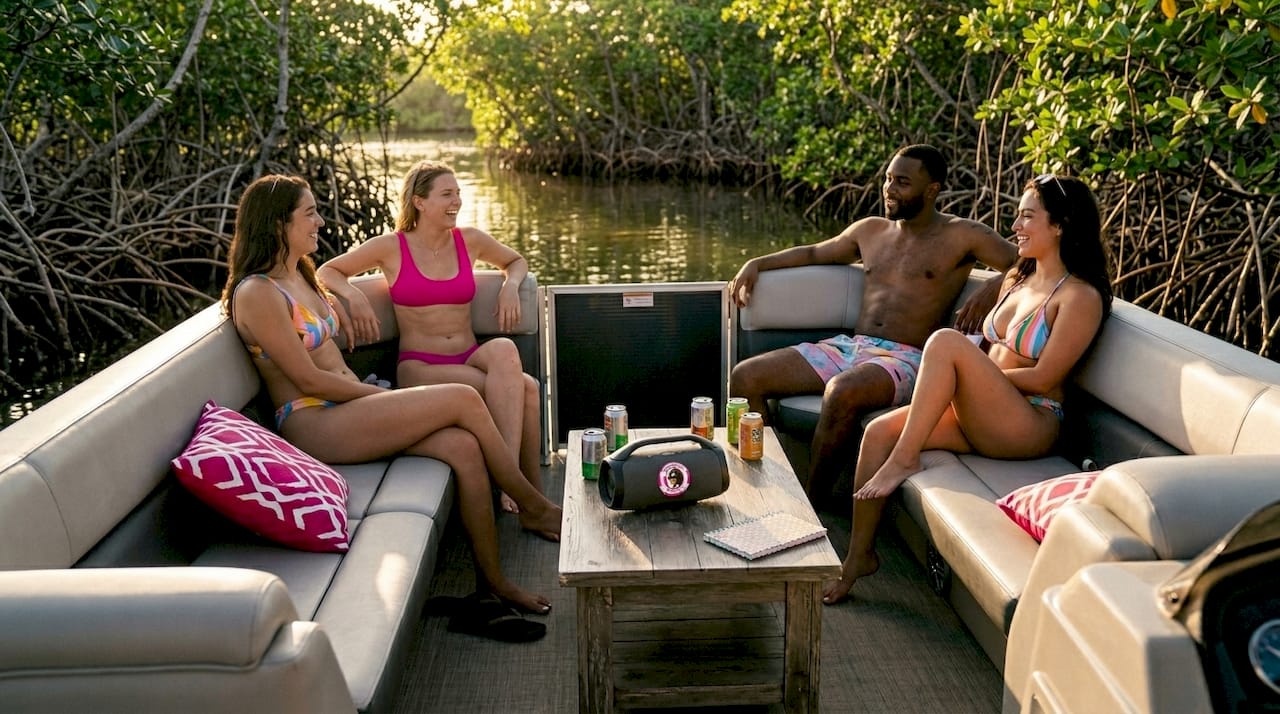
Boarding is another area where pontoons stand out. Multiple gate openings around the railing mean you can step on and off from a dock without climbing over anything. For older adults with limited mobility, or parents managing young children, that detail matters enormously. It is the difference between a stressful scramble and a relaxed, confident step aboard.
The seating layout on most pontoons wraps around the perimeter of the deck, facing inward. That means everyone in your group faces each other. Conversation flows naturally. Nobody is staring at the back of someone's head. Cupholders, shade options, and storage built into the seating make it genuinely comfortable for a three or four hour outing without anyone getting restless.
"The pontoon experience is less about boating and more about being together on the water. The layout invites people to relax, talk, and enjoy the scenery rather than focus on the mechanics of the ride."
Comfort features that matter most for non-boaters:
- Wraparound seating that keeps groups connected
- Multiple boarding gates for easy, stress-free access
- Built-in shade options for South Florida's sun
- Flat walking surface safe for kids and older adults
- Ample storage for snacks, gear, and personal items
Pro Tip: When you book family-friendly pontoon rentals, ask whether the boat includes a bimini top. South Florida sun is intense, and a shaded seating area makes a half-day trip significantly more enjoyable for everyone, especially young children.
Pontoon performance on calm South Florida waters
Understanding where and how pontoons perform best brings us closer to seeing why they're ideal in South Florida for non-boaters.
South Florida's waterways are genuinely well-suited to pontoon boats. The Intracoastal Waterway, Lake Boca, and the calm coastal channels around Boca Raton, Deerfield Beach, and Delray Beach are protected from ocean swells. You are not dealing with open-ocean conditions. The water is typically flat to mildly choppy, which is exactly where pontoons perform at their best.
Pontoons with 25-inch diameter tubes and a third-tube performance package handle light chop predictably, which means non-boaters can cruise and dock without the sudden lurching that makes traditional boats feel unpredictable. Wider beams also help. For reference, some pontoon models feature a 98-inch beam and over 2,000 lbs of capacity, delivering the kind of stability that makes first-time operators feel in control rather than overwhelmed.
Simple steps for handling a pontoon as a non-boater:
- Complete the rental staff's orientation before leaving the dock. Ask every question you have.
- Start the engine and let it idle for two minutes before moving.
- Back out slowly using reverse, keeping your speed minimal until you are clear of the dock.
- Steer with small, gradual movements. Pontoons respond predictably but not instantly.
- Reduce speed well before approaching any dock, sandbar, or other vessel.
- Use calm water pontoon rentals on the Intracoastal to stay in protected, low-traffic zones.
What makes South Florida pontoon handling easier:
- Protected waterways with minimal wave action
- Wide turning radius that rewards patience over speed
- Flat-bottom design that does not nose-dive in light chop
- Lower top speeds that give beginners more reaction time
Comparing pontoons to traditional boats for non-boaters
Let's compare pontoons directly with the typical boats to highlight why they suit non-boaters so well.
The average runabout or V-hull boat is designed for performance. It cuts through water efficiently, handles speed well, and appeals to experienced boaters who want a responsive, athletic ride. For a non-boater, that same responsiveness can feel alarming. The boat leans into turns. Wakes from other vessels create a rocking sensation. Passengers are expected to hold on and stay seated.
Pontoons' wide, open decks and stable feel lower stress for first-time operators compared to runabouts, with wraparound seating that supports relaxed family outings rather than white-knuckle rides. That is not a knock on runabouts. It is simply a recognition that different boats serve different purposes, and for a non-boater prioritizing comfort and confidence, the pontoon wins clearly.
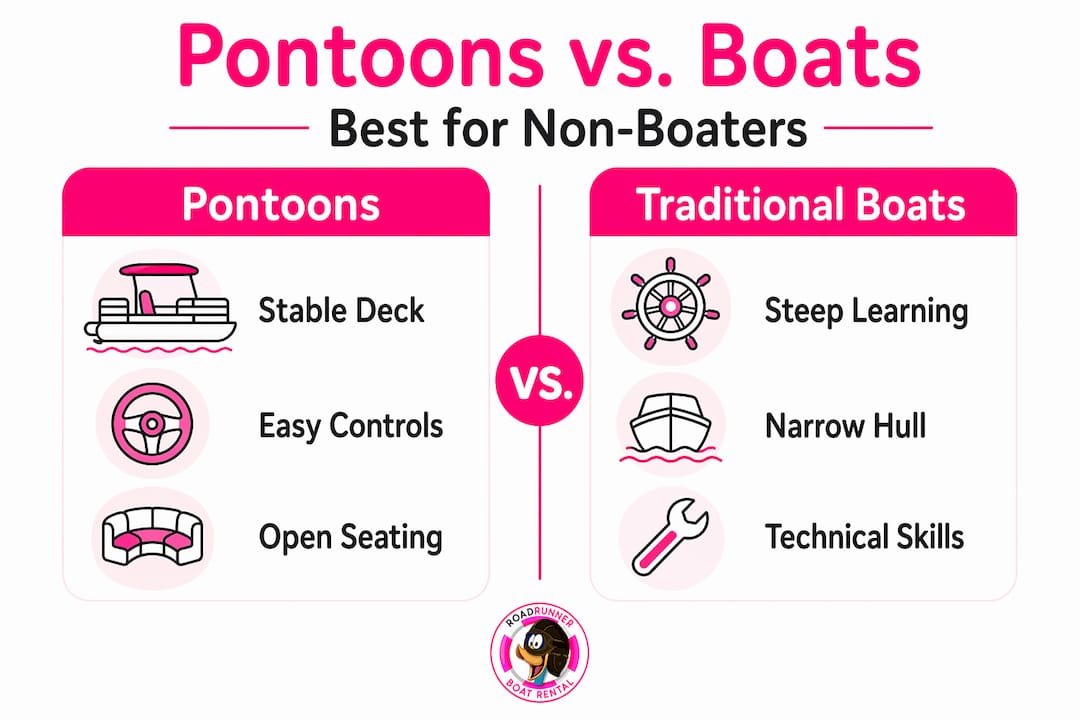
| Feature | Pontoon boat | V-hull runabout |
|---|---|---|
| Deck width | 8+ feet | 5 to 6 feet |
| Passenger capacity | 10 to 14 people | 4 to 8 people |
| Stability at rest | Excellent | Moderate |
| Boarding ease | Easy (multiple gates) | Moderate (single entry) |
| Ride comfort in chop | Smooth and flat | Bouncy and lean |
| Social seating layout | Wraparound, facing inward | Forward-facing rows |
| Learning curve for novices | Low | Moderate to high |
Why non-boaters consistently prefer pontoons:
- No tipping sensation when passengers shift weight
- Easier docking due to slower, more predictable handling
- More space for coolers, gear, and group movement
- Lower anxiety for the person operating the boat
If you want to try boating without committing to a steep learning curve, affordable pontoon rentals are the most practical starting point available in South Florida.
How to enjoy your first pontoon experience in South Florida
With a solid understanding of pontoon benefits, here's how to make your first pontoon trip smooth and fun.
The single biggest mistake first-timers make is skipping the pre-departure walkthrough. Every rental company will offer one. Take it seriously. Spend ten minutes learning where the controls are, how the throttle responds, and what to do if something unexpected happens. That ten minutes pays off the entire day.
Step-by-step guide for your first pontoon rental:
- Book during calm weather windows. Mid-morning to late afternoon, roughly 11am to 5pm, offers the most settled conditions on South Florida waterways.
- Confirm your group size in advance so the rental company matches you to the right boat capacity.
- Arrive 15 minutes early for your orientation and pre-boarding walkthrough.
- Ask the staff to demonstrate docking and reversing before you leave.
- Stay within designated rental zones, typically the Intracoastal or protected coastal areas.
- Anchor at a sandbar, relax, and let the experience come to you rather than trying to cover too much distance.
What to bring on your first pontoon trip:
- Reef-safe sunscreen (required at many South Florida waterways)
- Reusable water bottles and snacks for the group
- Life jackets for children (required by law for under 6 in Florida)
- A waterproof phone case and a small dry bag
- Light layers for the ride back if you go into the evening
South Florida rental operators offer easy-to-drive pontoons for families without prior experience on calm coastal waters, which means the barrier to getting started is genuinely low. You do not need a boating license in Florida to operate a rental vessel if you were born before January 1, 1988, and most rental companies provide a brief safety orientation regardless.
Pro Tip: Before you book your pontoon rental, check the wind forecast for your chosen day. Winds under 10 mph make for ideal conditions. Anything above 15 mph will create chop that, while manageable on a pontoon, is less comfortable for a first outing.
Why many non-boaters find pontoons the best gateway to boating enjoyment
Now that you know how to enjoy your first trip, here's a deeper look at why pontoons truly resonate with non-boaters.
Here is something the boating industry rarely says out loud: most people who try boating for the first time and never go back had a bad first experience on the wrong boat. A narrow, bouncy runabout in choppy water with nowhere to sit comfortably is not a gateway to a lifelong hobby. It is a reason to stay on land.
Pontoons solve this problem quietly and completely. Reddit pontoon users describe the experience as sitting on "couches on a platform" with minimal bounce, ideal for all-day anchoring without seasickness. That description sounds casual, but it captures something important. The pontoon removes the physical discomfort that makes boating feel like an endurance test for newcomers.
There is also a social dimension that gets overlooked. On most boats, the driver faces forward and passengers sit behind them. Conversation is difficult. The experience is isolated. On a pontoon, the wraparound layout means everyone is part of the same moment. You are not passengers on a vessel. You are a group of people sharing an afternoon on the water. That shift in dynamic is what turns a one-time rental into a regular habit for many families.
The minimal technical demands matter too. You do not need to understand trim tabs, hull angles, or wake management to have a great time on a pontoon. You need to know how to steer, how to throttle, and how to dock slowly. That is genuinely learnable in one orientation session. And that accessibility is exactly what makes family boating with pontoons such a reliable choice for groups who want enjoyment without a steep learning curve.
The uncomfortable truth is that boating culture has historically made entry feel harder than it needs to be. Pontoons are the quiet correction to that problem.
Start your relaxed South Florida boating adventure with Roadrunner rentals
Ready to experience the ease and fun of pontoon boating? Here's how Roadrunner makes it simple to get on the water.
At Roadrunner Boat Rental Boca Raton, we built our rental experience specifically for people who are new to boating. Our pontoon boat rental Boca Raton options are clean, reliable, and easy to operate from the first minute. Every rental includes a full orientation so you leave the dock feeling confident, not anxious. Our boats are positioned on calm, scenic South Florida waterways, giving you access to Lake Boca, the Intracoastal, and nearby sandbars without ever venturing into open ocean. Whether you are planning a birthday outing, a family afternoon, or just a relaxing cruise, our family-friendly boat rentals Boca Raton are sized and priced for real people, not just experienced boaters.
Booking is straightforward with no complicated steps. Book a pontoon boat now and we will handle the rest.
Frequently asked questions
Why are pontoon boats recommended for beginners?
Pontoon boats offer a stable, wide deck and predictable handling, making them easier and less intimidating for first-time boaters. Their flat, calm onboard feel at rest reduces operator anxiety compared to most V-hull boats.
Can non-boaters safely operate a pontoon boat in South Florida waters?
Yes, pontoons are designed for calm waters like South Florida's Intracoastal, with easy controls and stability ideal for novices. South Florida rental operators offer easy-to-drive pontoons on calm coastal waters daily for non-boaters without prior experience.
What makes pontoon boats comfortable for families with children and elders?
Wide, level decks with high railings and multiple gates allow easy boarding and secure movement for all ages. High railings and level decks enable safe boarding for toddlers to grandparents, unlike the narrow, tippy feel of V-hull boats.
How do pontoons compare to traditional boats for social outings?
Pontoons' open layouts and wraparound seating create a more social and spacious atmosphere than most traditional boats. Wide open deck space and inward-facing seating support relaxed group conversation and easy interaction throughout the outing.