

Planning a boat rental sounds straightforward until you show up on a Saturday morning and the boat you wanted is gone, the price jumped 25% from what you saw online, or you realize you needed a boating safety card to legally operate the vessel. These are not edge cases. They happen to first-timers and experienced renters alike. The right boat rental booking tips save you money, prevent last-minute stress, and turn a potentially frustrating process into something you actually look forward to. Here is what you need to know before you book.
Table of Contents
- Key takeaways
- 1. Match the boat type to your actual plans
- 2. Book early, especially for weekends and holidays
- 3. Understand the full pricing structure before you commit
- 4. Check legal requirements and safety certifications
- 5. Build your pre-booking checklist
- 6. Inspect the boat and document everything at pickup
- 7. Understand cancellation and weather policies
- My honest take on what actually matters
- Book your next day on the water with Roadrunnerboatrental
- FAQ
Key takeaways
| Point | Details |
|---|---|
| Book early, save more | Peak weekends sell out fast; booking weeks ahead locks in availability and better rates. |
| Know all costs upfront | Fuel policies, damage waivers, and deposits add up quickly beyond the base rental price. |
| Match the boat to your plan | Pontoons suit families and groups; speedboats work for watersports; fishing boats serve anglers. |
| Verify legal requirements first | Age limits and boating safety certifications vary by state and can affect your ability to rent. |
| Document everything at pickup | Timestamped photos before and after protect you from unfair damage charges. |
1. Match the boat type to your actual plans
The single biggest mistake renters make is booking whatever is available rather than what fits their trip. Self-drive or captained options each serve different needs, and so does the type of vessel you choose.
Here is a quick breakdown of common boat types and their best uses:
- Pontoon boats: Wide, stable, and social. Perfect for families, birthday outings, and calm-water cruising. Typically accommodates 8 to 12 passengers comfortably.
- Speedboats: Great for watersports, tubing, and covering more distance. Smaller capacity, usually 4 to 6 people.
- Fishing boats: Designed with rod holders, livewells, and quieter motors for anglers. Not the best choice for sunbathing.
- Party boats or tri-toons: Larger, premium vessels built for groups who want space, comfort, and often a sound system.
- Captained charters: Ideal for anyone unfamiliar with local waterways. The captain handles navigation, docking, and local knowledge while you enjoy the ride.
Pro Tip: If you are a first-timer or new to a specific waterway, a captained charter removes the stress of navigation entirely and often leads to a much more enjoyable day on the water.
For a deeper comparison, read about pontoon vs speedboat rentals before you commit to a specific vessel type.
2. Book early, especially for weekends and holidays
Boat rental availability in popular waterfront destinations disappears fast. If you are planning around Memorial Day, Fourth of July, or any summer weekend, the boats you want may be fully reserved weeks in advance.
Weekend bookings generate 2 to 3 times the revenue of Tuesday rentals. That tells you two things: demand is high and pricing reflects it. Booking a Tuesday or Wednesday slot instead of Saturday can noticeably reduce what you pay.
Some practical ways to plan smarter:
- Set a booking window: For peak summer weekends in South Florida, aim to book at least 3 to 4 weeks out.
- Use online booking tools: Real-time availability systems reduce uncertainty and give you instant confirmation rather than waiting for a callback.
- Watch local event calendars: Regattas, waterfront festivals, and holiday weekends spike both demand and pricing simultaneously.
- Consider shoulder season: Late spring and early fall often offer the same great conditions at lower prices and with better availability.
3. Understand the full pricing structure before you commit
The advertised rate is rarely the total cost. Boat rental costs range widely, from around $40 per hour for tubes to nearly $940 for a premium tri-toon for a full day. A motorized fishing boat might run approximately $385 for four hours. That is before fuel, deposits, or waivers.
Here is what a typical cost breakdown looks like:
| Cost Component | What to Expect |
|---|---|
| Base rental rate | Varies by boat type, size, and duration |
| Fuel policy | Full-to-full, included, or metered with surcharge |
| Damage waiver | Typically $25 to $75 per rental |
| Security deposit | Usually $200 to $500, held on a card |
| Weekend premium | Often 20 to 30% higher than weekday rates |
| Late return fee | Charged per 30 minutes or per hour past the agreed return |
Fuel policies are where many renters get caught off guard. Full-to-full means you return the tank filled to where it started. Fuel-included pricing is baked into the rate. Metered fuel adds a per-gallon surcharge at the end. Ask specifically which model applies before you sign anything.
Pro Tip: When comparing two providers at similar price points, ask each one to quote a total cost including fuel, deposit, and waiver. The provider with the lower headline rate sometimes ends up being more expensive once all fees are counted.
4. Check legal requirements and safety certifications
This section matters more than most renters realize. Age limits and boating safety course requirements vary by state, and showing up without the right credentials means you are not getting on the water.
Key things to verify before your trip:
- Minimum age requirements: Many U.S. motorized boat rentals require the primary operator to be at least 25 years old, or to hold a valid boating safety card.
- State-specific certifications: Some states are straightforward and inexpensive. Missouri's boating safety course costs just $4.50 online. Florida has its own requirements that cover specific age groups.
- Charter licensing: Some captained charters require operators to hold a USCG captain license. This applies to the captain, not you, but verifying the charter is properly licensed protects you legally.
- Florida-specific rules: If you are renting in South Florida, review [Florida's boat rental ID requirements](https://blog.roadrunnerboatrental.com/blog/what-does-boat rental-id-require-in-florida) to know exactly what documentation you need at pickup.
Non-compliance is not just a fine risk. It creates personal liability if anything goes wrong on the water.
5. Build your pre-booking checklist
A solid boat rental checklist for beginners addresses both what you need to bring and what questions to ask before finalizing the reservation. This is where most boat rental first-timer tips live, and they are genuinely worth going through.
Before you confirm your booking, ask the provider these questions:
- What is the fuel policy and estimated fuel cost for my planned route?
- Is a boating safety certification required for this vessel in this state?
- What is the cancellation policy and is there a weather-related rescheduling option?
- What safety gear is onboard and is it Coast Guard compliant?
- What is the late return fee structure?
- Is the damage waiver mandatory or optional?
- Are there any restricted areas or speed zones I should know about?
These are the core boat rental questions to ask any provider, and a good operator will answer all of them without hesitation. If you get vague answers or pushback on any of these, that is important information.
6. Inspect the boat and document everything at pickup
Once you arrive at the dock, slow down before you cast off. The documentation step takes ten minutes and can save you from paying for damage you did not cause.
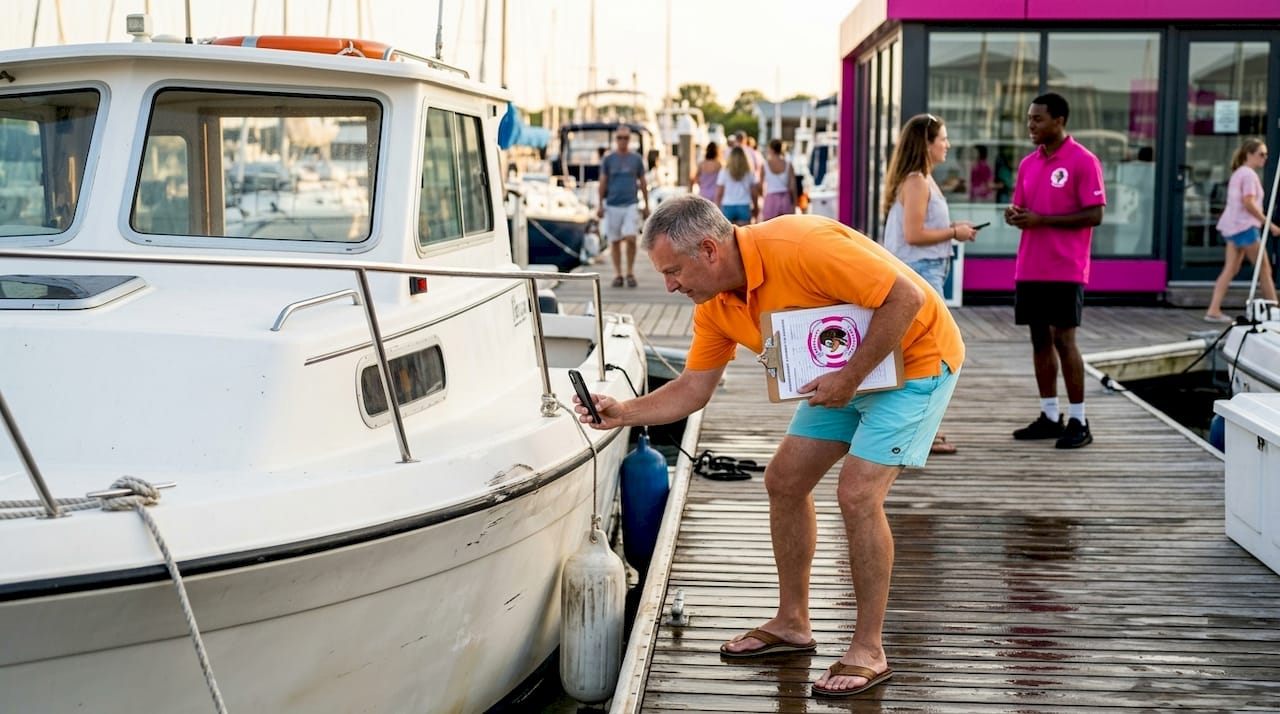
Take timestamped photos and videos of every visible surface before departure. Check for existing scratches, dents, scuffs on the hull, and any damage to equipment. Do the same when you return the boat. Send copies to yourself so the timestamp is tied to your phone's metadata, not just the file name.
Beyond documentation, use this time to:
- Test all safety equipment (life jackets, fire extinguisher, flares, horn)
- Confirm the fuel level matches what is noted on your rental agreement
- Ask the attendant to walk you through the controls if anything is unfamiliar
- Verify that navigation lights work if you are renting for an extended period
Digital waivers and online confirmation emails sent before your trip date streamline this whole process. Providers who use automated booking systems tend to have fewer disputes and smoother dock-side pickups because expectations are already set in writing.
7. Understand cancellation and weather policies
Boat rental cancellation policy tips are consistently overlooked until they are needed. Weather on the water changes fast, especially in South Florida where afternoon storms are common from late spring through early fall.
Ask specifically: Does the company reschedule for weather, or only cancel? Is the refund full, partial, or a credit? What is the cutoff time for canceling without penalty? Some companies offer flexible rescheduling with 24 to 48 hours notice while others charge a flat cancellation fee regardless of conditions. Customers value transparent cancellation policies just as much as pricing clarity. A company that is vague about either one is worth reconsidering.
My honest take on what actually matters
I have worked with enough boat rental customers and operators over the years to know where the real problems come from. It is almost never the boat itself.
In my experience, the renters who have the worst days are the ones who booked the cheapest option they could find at the last minute, skipped the inspection, and assumed everything would sort itself out on the water. And the renters who have the best days spent maybe 30 extra minutes on research, asked a few direct questions, and showed up prepared.
What I have found is that the self-drive versus captained question is where first-timers overthink it. If you do not know the local waterway well, get a captain. Not because you are incapable, but because local knowledge genuinely matters. Knowing where the sandbars are, where the no-wake zones start, and how to read the tidal patterns on a specific channel is not something you pick up from a map.
My honest boat rental advice: spend more time vetting the provider than you spend choosing the boat. A trustworthy operator with clear policies, real-time booking, and a responsive team will make almost any vessel enjoyable.
— Cristiano
Book your next day on the water with Roadrunnerboatrental
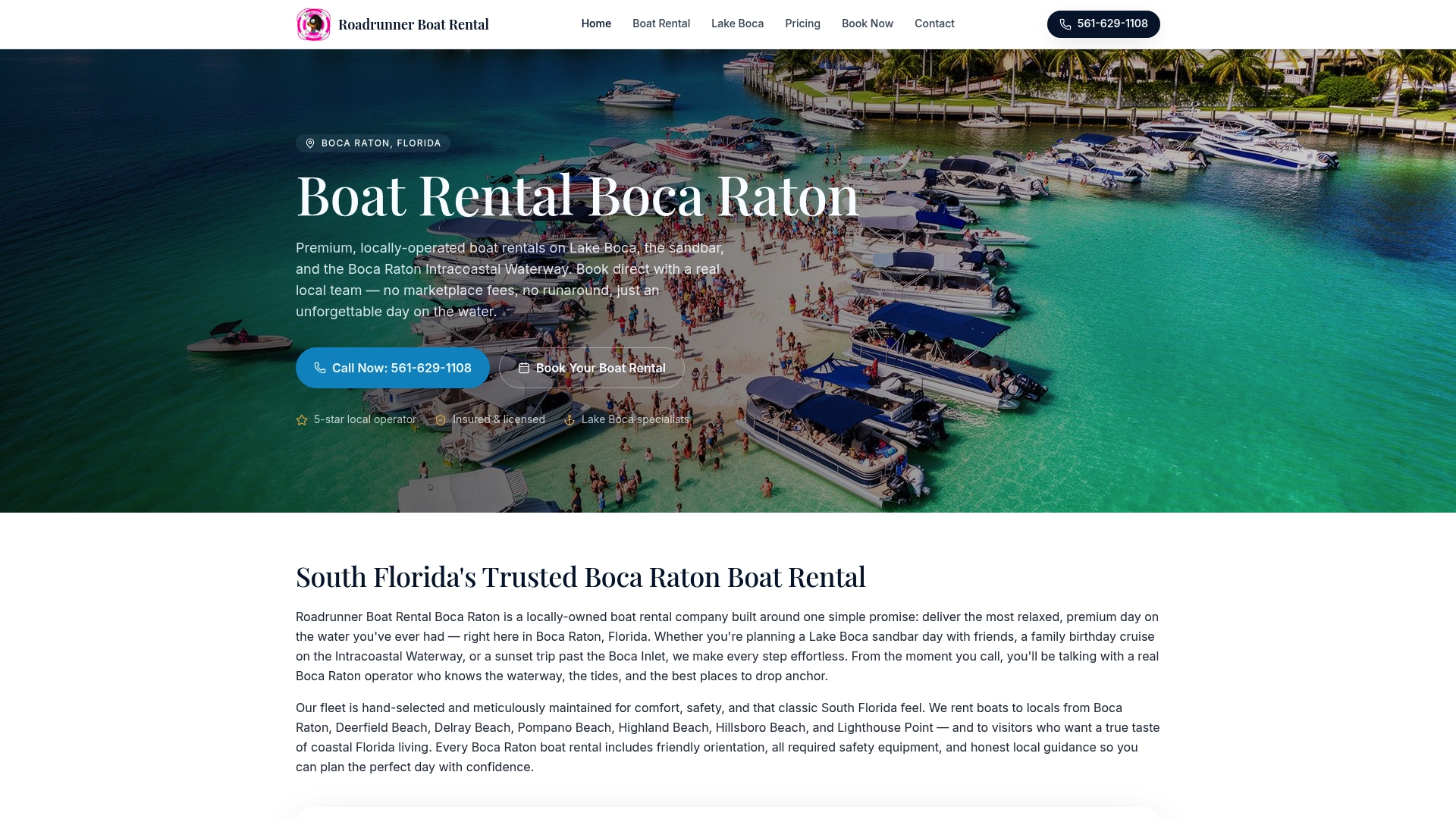
If you are planning a trip on the water in South Florida, Roadrunnerboatrental makes the booking process as simple as it should be. Their Boca Raton boat rental fleet includes pontoons, party boats, fishing boats, and captained charters built for everything from a quiet Lake Boca cruise to a full sandbar party. Real-time availability means you see exactly what is open when you are ready to commit, and their pricing is transparent with no surprise fees at the dock. Whether you want a flexible hourly rental or a full-day outing, you can reserve your boat online in minutes. Book early, especially for weekends, and the team is available to answer every question on your checklist before you arrive.
FAQ
How far in advance should I book a boat rental?
For peak weekends and holidays, book at least 3 to 4 weeks ahead. Popular boats and time slots sell out quickly, and last-minute availability usually comes with premium pricing.
What should I bring on a boat rental?
Bring a valid ID, your boating safety certification if required, sunscreen, water, snacks, a marine-rated phone case, and any gear specific to your activity such as fishing licenses or snorkeling equipment.
What is a boat rental checklist for beginners?
A basic boat rental checklist covers ID and certifications, questions about fuel policy and cancellation terms, a pre-departure boat inspection with photos, safety gear confirmation, and knowing the route and any restricted zones before departure.
How do I avoid hidden fees on a boat rental?
Ask for a total cost quote that includes fuel policy, damage waiver, security deposit, and any late return fees. Weekend rental rates are typically 20 to 30% higher than weekday rates, so factor that in when comparing options.
Do I need a license to rent a boat in Florida?
Florida requires anyone born on or after January 1, 1988 to have a boating safety education ID card to operate a motorized vessel. Rental companies verify this at pickup, so complete the course before your trip date.