
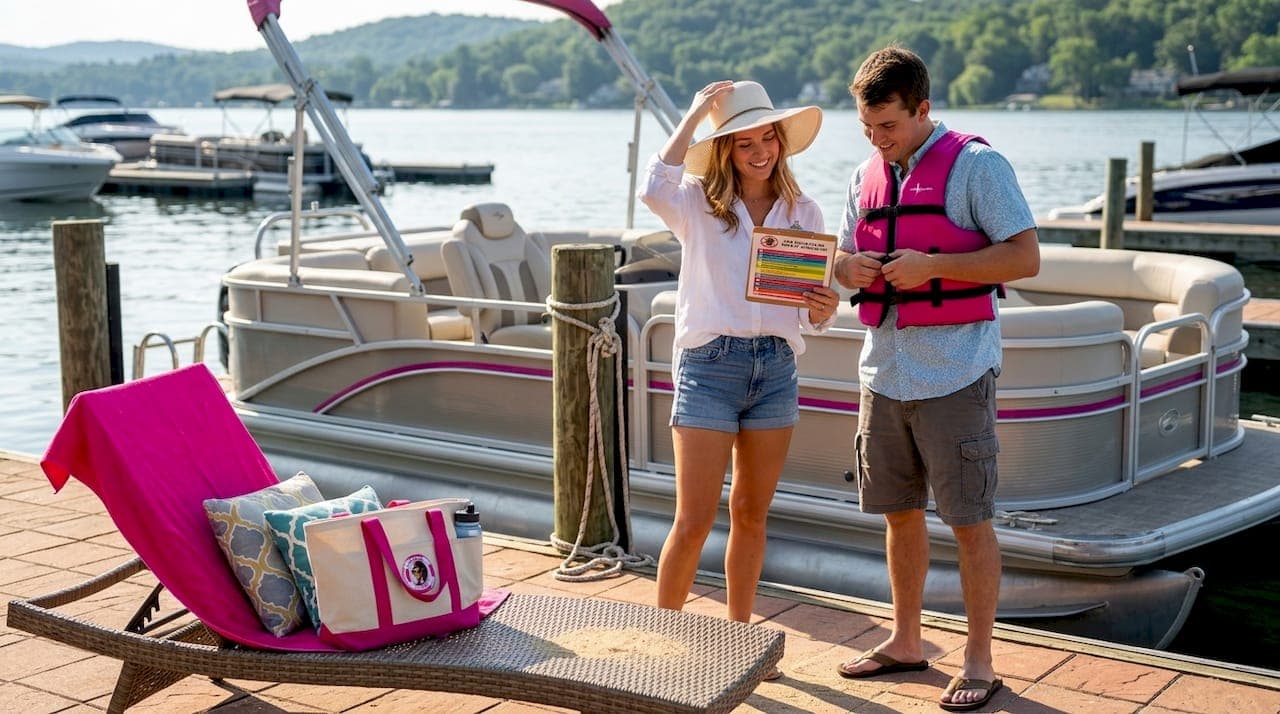
Renting a boat sounds simple until you realize it's nothing like renting a car. What is boat rental, exactly? At its core, it's a time-based agreement that lets you operate a boat on your own, without a captain, on a body of water of your choosing. But understanding what that actually involves, from pricing structures and safety responsibilities to licensing rules and add-ons, makes the difference between a great day on the water and an expensive, stressful one. This guide covers everything you need to know before you book.
Table of Contents
- Key takeaways
- What boat rental actually means
- Pricing, packages, and add-ons explained
- Safety, licensing, and legal requirements
- Choosing the right boat for your outing
- My honest take on renting a boat for the first time
- Experience Boca Raton on the water with Roadrunnerboatrental
- FAQ
Key takeaways
| Point | Details |
|---|---|
| Rental means self-operation | You are the captain. Unlike a charter, no crew is provided and the boat is your responsibility. |
| Pricing varies by duration | Most rentals offer hourly, half-day, and full-day rates. Knowing the difference saves money. |
| Licensing rules differ by state | Many states use on-site safety checklists instead of boater education cards for rentals. |
| Add-ons improve your experience | Coolers, GPS, fishing gear, and watersports equipment are common upgrades worth considering. |
| Boat type determines your outing | Matching the right vessel to your group size, skill level, and water type is the most important decision you will make. |
What boat rental actually means
The clearest definition: boat rental is self-operated, meaning you take the helm and you accept responsibility for the boat and everyone on it. There's no captain steering you around, no tour guide pointing out landmarks. It's your outing, on your terms.
That distinction matters more than most first-timers realize. Here's how boat rental compares to the other options you'll come across:
| Option | Who operates | Captain included | Best for |
|---|---|---|---|
| Boat rental | You | No | Independent groups, flexible schedules |
| Boat charter | Professional captain | Yes | Special events, offshore trips |
| Tour boat | Commercial operator | Yes | Sightseeing, structured experiences |
Charters and tour boats are guided experiences. Rentals are not. The freedom is the whole point, but it also means you own the responsibility.
Common rental boat types you'll encounter:
- Pontoon boats: Flat, stable, and spacious. The best choice for groups, families, and casual lake cruising.
- Center console motorboats: Versatile and fast. Popular for Intracoastal cruising, fishing, and sandbar trips.
- Ski and wake boats: Designed for towing tubes, water skiers, and wakeboarders. Usually require some boating experience.
- Fishing boats: Smaller, maneuverable, and rigged for angling. Perfect for nearshore or river fishing.
- Sailboats: Available at select marinas. Higher skill requirement and typically longer rental minimums.
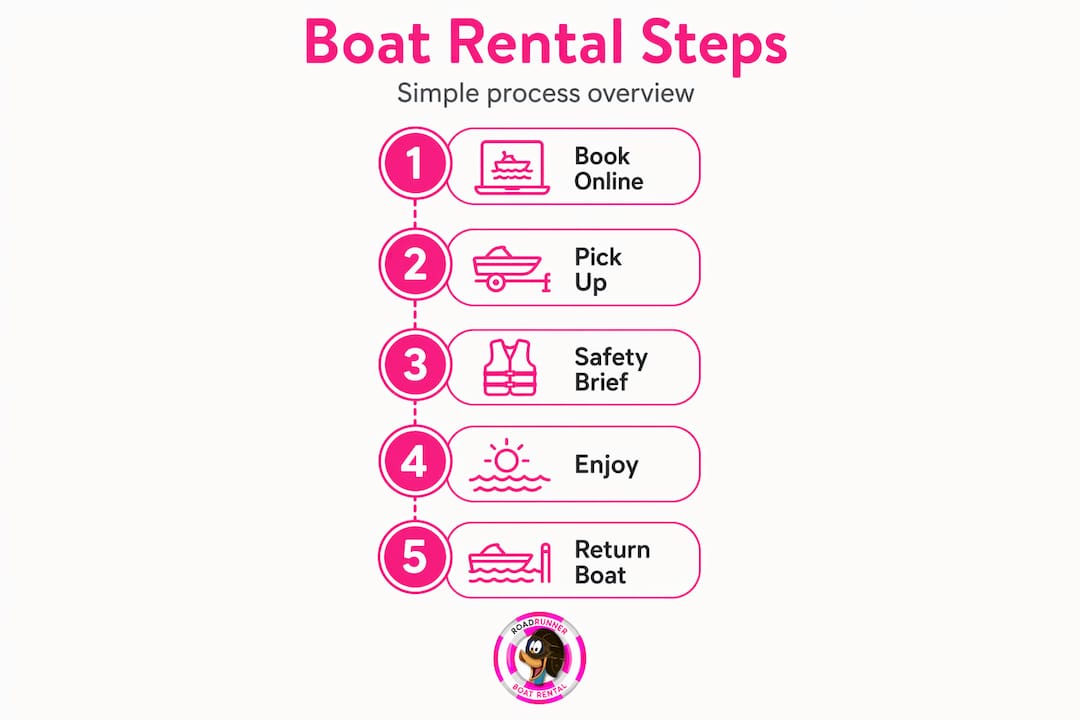
The pickup and drop-off process at most rental companies is straightforward. You arrive, present your ID, sign a rental agreement, receive a safety briefing, and get a walkthrough of the vessel's controls. You return it at the agreed time, fully fueled if that's part of your contract. Simple. Just don't be late, because overtime fees are real and often steep.
Pricing, packages, and add-ons explained
Understanding what is a boat rental pricing structure before you book is one of the most practical things you can do. Most rental companies price by time blocks, and knowing the difference between options can save you a significant amount of money.
The most common rental durations:
- 2-hour rental: Great for a quick sunset cruise or a first-timer testing the waters.
- Half-day rental (4 hours): The most popular option. Enough time for a sandbar trip, lunch on the water, or a fishing run.
- Full-day rental (8 hours): Best value per hour for groups who want a full experience.
Base pricing typically covers the boat, basic safety equipment (life jackets, fire extinguisher, flares), and a fuel policy, either a full-to-full exchange or a flat fuel charge. What it usually does not cover is the extras.
Boat rental add-ons worth having:
- Cooler with ice: Not every provider includes one. If you're out for half a day or more, this is non-negotiable.
- GPS or fish finder: Useful if you're exploring unfamiliar waterways or targeting specific spots.
- Fishing gear: Rod and reel packages are often available and far more convenient than hauling your own.
- Bluetooth speaker: Many rental companies offer this now. It's a small cost that significantly improves a long outing.
- Tube or watersports gear: If your rental boat can tow, this makes a half-day feel like an all-day adventure.
When comparing boat rental packages, look beyond the headline price. Ask what's included in the base rate, what adds fees, and whether fuel is charged separately. Some providers bundle coolers and safety gear into a "package" at a slight markup while others charge individually.
Pro Tip: Always ask about the fuel policy before you leave the dock. A "full tank included" deal sounds better than it is if the boat only holds 20 gallons. A full-to-full policy is more transparent and fairer for longer trips.
Watch out for security deposits, credit card holds, and late return penalties. These aren't hidden, but first-timers often skip the fine print and get surprised. Read the rental agreement like you mean it.
Safety, licensing, and legal requirements
This section is where a lot of first-timers get caught off guard. What is a boat rental license, and do you actually need one? The honest answer: it depends on your state, and your regular driver's license is almost certainly not enough.
Here's what the rules look like in three states that handle it differently:
- Washington requires either a Boater Education Card or completion of a Motor Vessel Rental Safety Checklist on-site for any motorized rental over 15 hp. That checklist is only valid for that specific rental period.
- Oregon allows renters 16 and older to operate powerboats over 10 hp without a boating education card, provided they complete a Watercraft Rental Safety Checklist at the livery before departure.
- California exempts rental operators from the state Boater Card requirement, but age rules and rental company policies still apply, and all boating laws remain in effect.
Florida, where Roadrunnerboatrental operates, has its own set of rules tied to birth year and vessel horsepower. Your rental company will walk you through what applies to you.
What to confirm before you leave the dock:
- You have reviewed and signed any required safety checklist.
- You know where all life jackets are stored and how many are onboard.
- You understand the boat's throttle, trim, and kill switch.
- You know the no-wake zones on your planned route.
- Every passenger has received a brief safety orientation.
"Captain must brief all passengers on safety protocols, life jacket use, and emergency steps for a safe outing." Boating safety briefings are a legal and ethical requirement, not a formality.
Many renters wrongly assume a driver's license alone suffices for any motorized rental. That misconception has consequences. Always confirm your state or local requirements before arriving at the marina.
Pro Tip: If you're renting in a state that allows an on-site safety checklist, don't rush through it. That checklist is literally your boating license for the day. Treat it seriously.
Choosing the right boat for your outing
The most common mistake first-timers make isn't skipping the safety briefing. It's picking the wrong boat for what they actually want to do. The right vessel changes everything about your day.
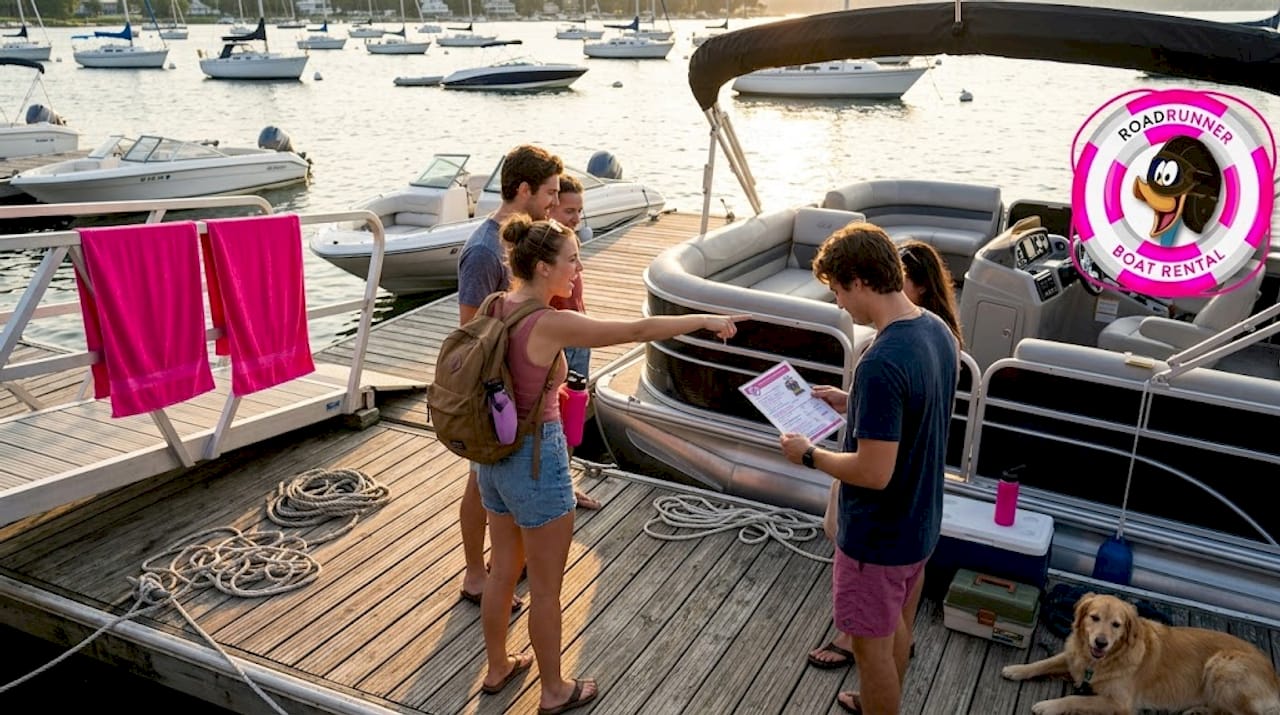
Here's a practical breakdown of who benefits most from each type:
| Boat type | Best for | Group size | Skill level |
|---|---|---|---|
| Pontoon | Family outings, parties, sandbar trips | 6 to 12 people | Beginner-friendly |
| Center console | Intracoastal cruising, fishing runs | 2 to 8 people | Some experience helpful |
| Ski/wake boat | Water sports, tubing | 4 to 8 people | Intermediate recommended |
| Fishing boat | Nearshore angling | 1 to 4 people | Beginner-friendly |
Factors to consider when choosing:
- Group size: Overloading a boat is a safety violation and a miserable experience. Know the vessel's capacity rating.
- Water type: Calm lake water, protected Intracoastal, and open ocean all demand different boats and different experience levels.
- Trip duration: A two-hour quick cruise in a small motorboat is fine. A six-hour family outing on Lake Boca calls for a pontoon with shade and seating.
- Destination: If you're planning a South Florida waterways trip, local providers who know the waterways can match you to the right vessel faster.
If you're unsure whether renting beats owning for your situation, it's worth reading through this boat rental vs ownership comparison before you commit to either. Most families who get on the water three to ten times a year are better served by renting.
Book in advance, especially for weekend dates and holidays. The best boats go fast, and showing up without a reservation in peak season is a gamble not worth taking.
My honest take on renting a boat for the first time
I've talked with a lot of first-time renters, and the pattern is always the same. They spend time researching the fun stuff — where to go, what to bring, which sandbar to hit — and almost no time on the stuff that actually determines whether the day goes well.
The safety briefing is the thing people rush through most. I get it. You're excited, your group is ready, the sun is out. But every single issue I've seen on the water traces back to the operator not fully understanding the vessel they were on. The kill switch, the trim tabs, the no-wake zones. These are not technical mysteries. They take five minutes to learn and they matter.
The other thing I'd push back on: the idea that a basic boat is "good enough." If you have eight people and you rent a small center console because it's cheaper, you will be uncomfortable, probably over capacity, and you'll spend the trip wishing you'd gone with the pontoon. Match the boat to the experience you actually want, not the experience you can afford on paper.
Finally, why rent a boat instead of booking a charter or joining a tour? Because freedom is the product. You set the pace, you pick the destination, you decide when to swim and when to move. That autonomy is genuinely valuable, and it's what makes a self-drive rental different from anything else on the water.
— Cristiano
Experience Boca Raton on the water with Roadrunnerboatrental
Roadrunnerboatrental makes it easy to get out on the water without the guesswork. Whether you want a pontoon rental in Boca Raton for a family day on Lake Boca, a fishing boat rental along the Intracoastal, or a party boat for a sandbar trip, the fleet covers every kind of outing.
Every rental includes a full safety briefing, clean and reliable vessels, and a booking process that takes minutes. Roadrunnerboatrental serves Boca Raton, Deerfield Beach, Delray Beach, and Pompano Beach, giving you access to some of the best waterways in South Florida. Ready to get on the water? Check availability and book your rental directly online.
FAQ
What is boat rental and how does it work?
Boat rental is a time-based agreement where you operate a boat yourself without a captain or crew. You pick up the vessel, complete a safety briefing, and return it at the agreed time.
Do you need a license to rent a boat?
It depends on your state. Many states require either a Boater Education Card or an on-site safety checklist completed before departure. A driver's license alone is rarely sufficient for motorized rentals.
What is included in a standard boat rental package?
Most base rentals include the boat, required safety equipment, and a fuel policy. Add-ons like coolers, GPS, fishing gear, and watersports equipment are typically available at an extra cost.
How long can you rent a boat?
Most rental companies offer hourly blocks, half-day (4-hour), and full-day (8-hour) options. What is a boat rental duration that works best for you depends on your group size, destination, and planned activities.
What is the difference between a boat rental and a charter?
A boat rental means you operate the boat yourself. A charter includes a licensed captain who navigates for you. Rentals offer more freedom. Charters are better suited for offshore trips or those who prefer not to take the wheel.