
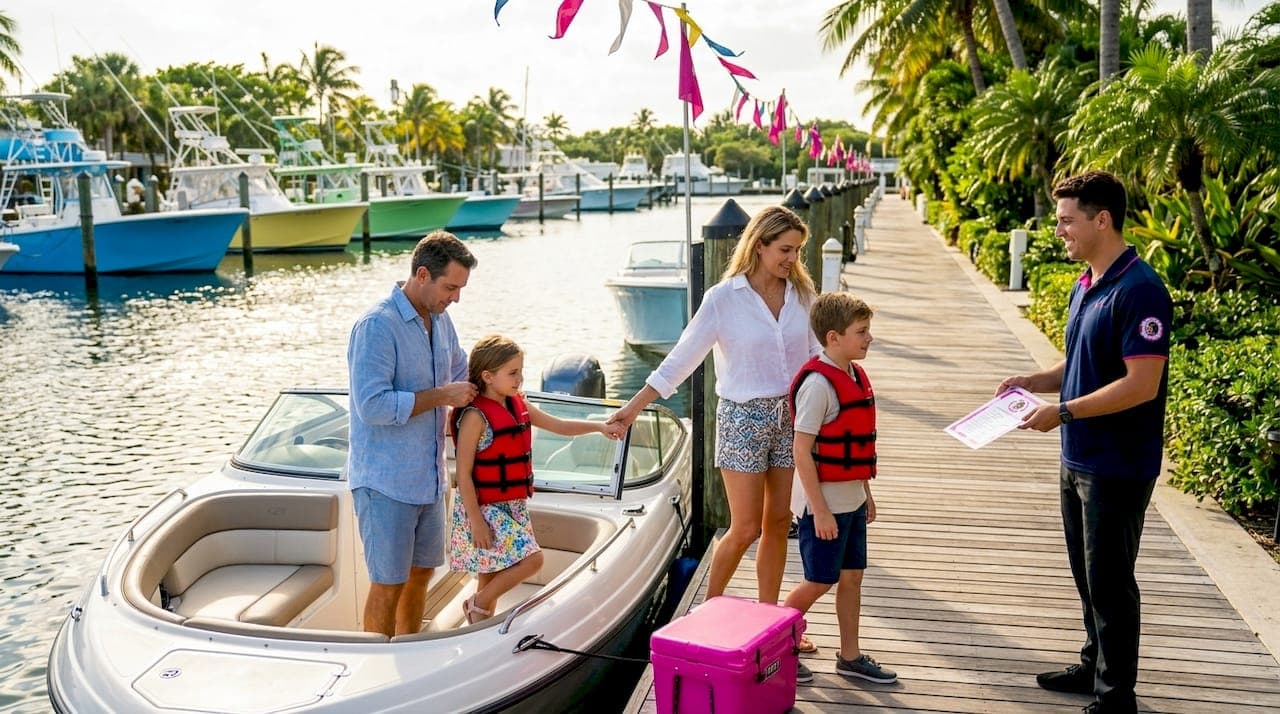
South Florida sits on some of the most boatable water in the country, and the question of boat rental vs ownership comes up for almost every family that spends time near the Intracoastal or Lake Boca. The answer is rarely obvious. Ownership sounds like freedom until the marina bill arrives in January alongside a surprise engine repair. Renting sounds limiting until you realize you can step off the boat at 5 p.m. and never think about it again. Understanding the real numbers, the Florida-specific risks, and your own usage habits will make this decision far clearer than any salesperson ever will.
Table of Contents
- Understanding the true costs of boat rental vs ownership in South Florida
- Evaluating boat rental options and costs for occasional users
- How usage frequency shapes your boat rental vs ownership decision
- Insurance, risk, and storage considerations unique to Florida boating
- Making the smart choice: applying this guide to your South Florida boating plans
- Why many families' boat ownership dreams in Florida can become costly realities
- Discover affordable and flexible boat rental options in Boca Raton
- Frequently asked questions
Key Takeaways
| Point | Details |
|---|---|
| Understand total costs | Boat ownership includes insurance, storage, maintenance, fuel, and registration costs that add up significantly in Florida. |
| Match usage to option | Rent if you boat fewer than 15 days per year; ownership suits those boating more than 100 days annually. |
| Storage impacts cost | Wet slips increase insurance and storage fees, while dry stack and trailers can reduce expenses and risk. |
| Renting reduces risk | Renting shifts maintenance, insurance, and storm risks to the operator, offering flexibility and lower upfront cost. |
| Plan realistically | Assess your true boating frequency, budget, and lifestyle preferences before choosing between owning and renting. |
Understanding the true costs of boat rental vs ownership in South Florida
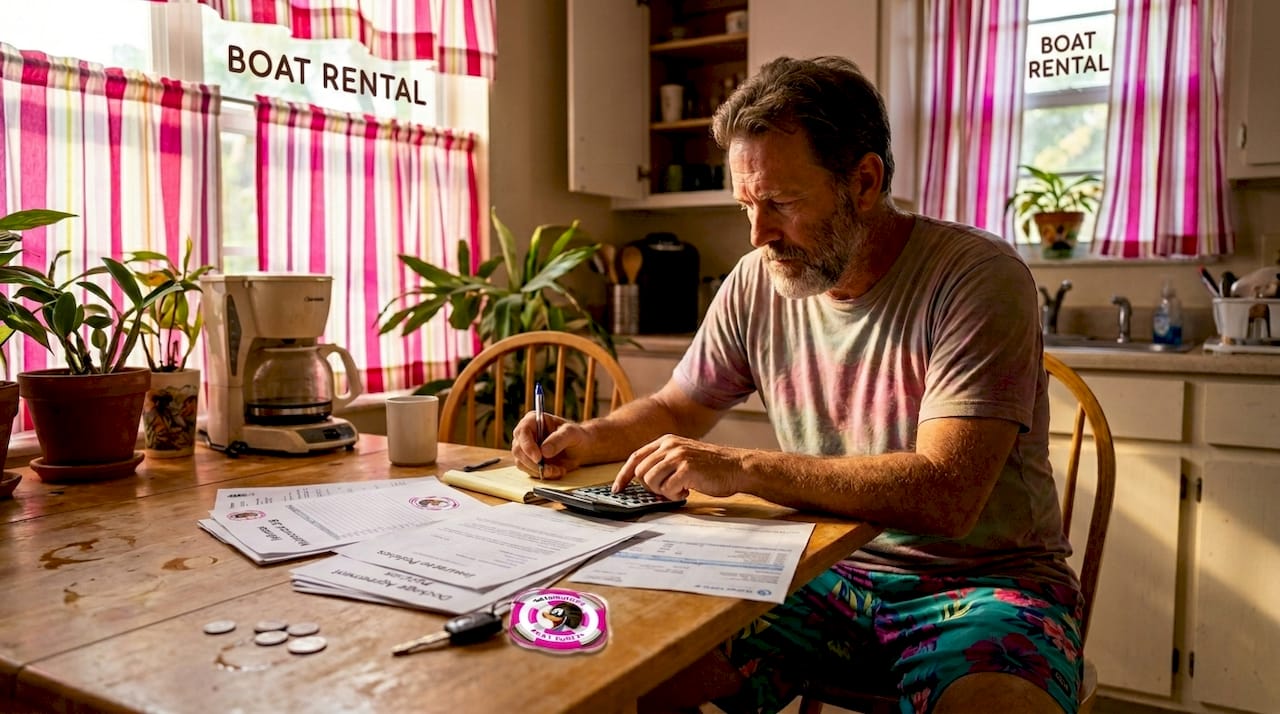
Most people who buy a boat in Florida anchor their mental budget around the purchase price. That is the first mistake. The ongoing costs of boat ownership stack up fast, and in South Florida they stack up faster than almost anywhere else in the country.
Here is what you are actually signing up for when you buy a recreational boat in Florida:
- Insurance: Florida boat insurance for recreational vessels runs roughly $300 to $1,500 per year, with premiums running 20 to 40% higher than the national average because of hurricane exposure. A 25-foot center console in a wet slip will sit at the higher end of that range without question.
- Marina storage: Wet-slip costs in Florida run roughly $28 to $45 per linear foot per month. A 24-foot boat in a Boca Raton marina could cost you $700 to $1,100 every single month just to park it in the water.
- Fuel: A typical recreational outing on a 150-horsepower outboard burns 6 to 10 gallons per hour. At current South Florida fuel prices, a full day on the water can cost $80 to $200 in gas alone.
- Maintenance: Bottom paint, engine service, impeller replacements, trailer bearings, electronics. Budget at least 10% of the boat's value annually for routine upkeep.
- Registration and taxes: Florida charges annual registration fees based on vessel length, plus sales tax at purchase and potential property tax depending on how you store it.
| Cost category | Annual estimate (24-ft boat) |
|---|---|
| Insurance | $600 to $1,200 |
| Wet-slip storage | $8,400 to $13,200 |
| Fuel (20 outings) | $1,600 to $4,000 |
| Maintenance | $1,500 to $3,000 |
| Registration and fees | $200 to $400 |
| Total annual cost | $12,300 to $21,800 |
"The purchase price is just the entry fee. The real cost of owning a boat in Florida is what you pay every year whether you use it or not."
Pro Tip: If you are considering ownership, pull your marina's current wet-slip rate sheet before you buy. That single number often changes the entire financial picture.
Now that you understand ownership costs, compare these figures against boat rental pricing to see which option actually fits your budget and lifestyle.
Evaluating boat rental options and costs for occasional users
Renting a boat flips the financial model entirely. You pay for the days you use the water and nothing else. No storage bill in February when it is raining. No insurance renewal. No engine service appointment you have to schedule around your work calendar.
The core benefits of renting for South Florida families include:
- Zero fixed costs. You pay per outing, not per month. If life gets busy and you skip three weekends, you owe nothing.
- No maintenance responsibility. The operator handles every mechanical issue, cleaning, and safety check before you step aboard.
- Insurance is typically covered. Florida rental operators are required to carry liability insurance on rental vessels, which means you are not personally on the hook for the boat itself in most standard rental scenarios.
- Flexibility to try different boats. Renting lets you experience a center console one weekend and a pontoon the next, which is genuinely useful if you have not yet settled on what kind of boating you actually enjoy.
- No storm prep. When a tropical system approaches, the rental company moves or secures their fleet. You do nothing.
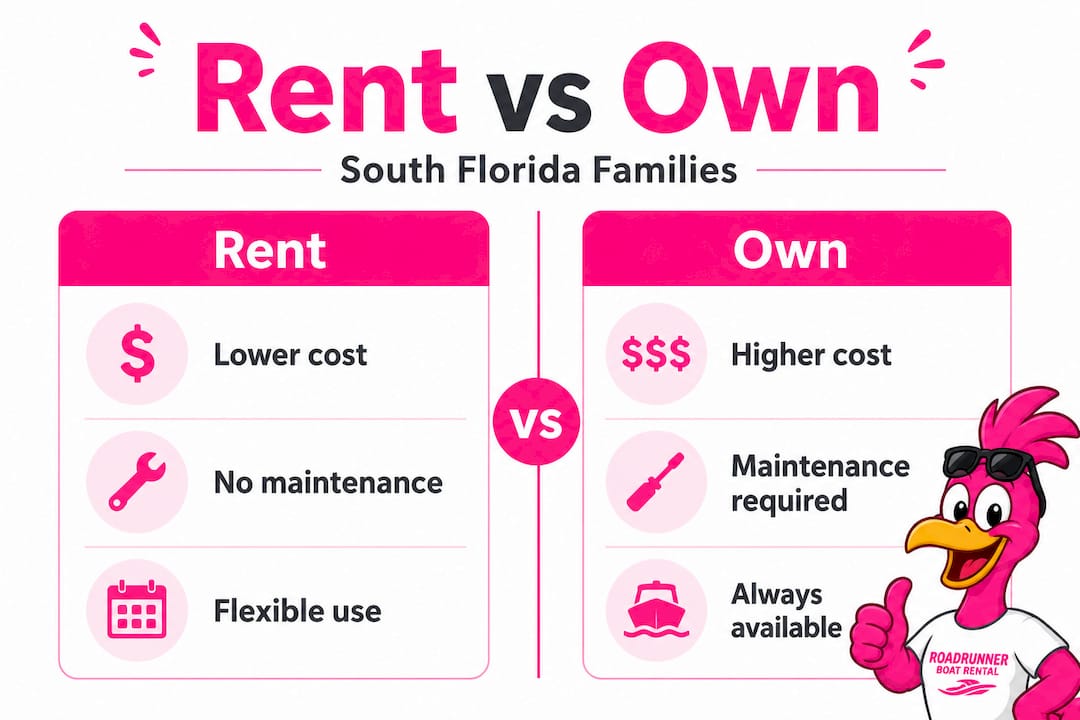
For families who boat fewer than 15 days a year, which describes the majority of recreational boaters in South Florida, renting is almost always the more rational financial choice. The math is not close.
Pro Tip: Before your first rental, ask the operator exactly what their liability coverage includes and whether it covers passenger injury. Most operators are transparent about this, and it takes 60 seconds to ask.
Exploring boat rental options in Boca Raton gives you a practical sense of what a typical day on the water actually costs compared to the annual ownership figures above.
One underappreciated advantage of boat rental is that it removes the psychological weight of ownership. You show up, you enjoy the water, you leave. There is real value in that simplicity.
How usage frequency shapes your boat rental vs ownership decision
Usage frequency is the single most important variable in the boat rental vs boat ownership calculation. Everything else, costs, insurance, storage, is secondary to how many days per year you actually plan to be on the water.
Here is a practical framework based on annual use days:
- Under 15 days per year: Renting or chartering is almost certainly your best option. Fixed ownership costs will far exceed what you would spend on rentals.
- 15 to 50 days per year: This is a gray zone. Rental costs start to add up, but ownership costs are still hard to justify. Boat club memberships or fractional ownership arrangements can make sense here.
- 50 to 100 days per year: You are getting close to ownership territory, but the math still depends heavily on your storage choice and insurance situation.
- Over 100 days per year: Ownership becomes rational at this level of use. The fixed costs spread across enough outings that the per-day cost starts to compete with rental rates.
| Annual use days | Recommended approach | Estimated annual cost |
|---|---|---|
| Under 15 | Rent or charter | $500 to $2,500 |
| 15 to 50 | Boat club or fractional | $3,000 to $7,000 |
| 50 to 100 | Evaluate ownership carefully | $8,000 to $15,000 |
| Over 100 | Ownership likely makes sense | $12,000 to $22,000+ |
Be honest with yourself here. Most families overestimate how often they will actually use a boat. Work schedules, school calendars, summer heat, and rainy season all cut into that optimistic number you told yourself when you were standing in a boat showroom.
Pro Tip: Track your actual beach, kayak, or water activity days over the next 12 months before committing to ownership. Real data beats optimistic projections every time.
For families in the under-50-days-per-year category, affordable boat rental in Boca Raton gives you full access to South Florida's waterways without locking yourself into a five-figure annual commitment.
Insurance, risk, and storage considerations unique to Florida boating
Florida is not a typical boating state. The combination of hurricane risk, saltwater corrosion, and intense summer storms creates a risk environment that owners in the Midwest or Pacific Northwest simply do not face. These factors shape both the cost and the stress of ownership in ways that catch first-time Florida boat buyers off guard.
Key risk and storage factors to understand:
- Hurricane exposure is real and expensive. Storm prep, haul-out fees, and emergency repairs after a tropical event can run thousands of dollars in a single season.
- Wet-slip storage amplifies risk. Insurance premiums vary significantly based on whether your boat lives in a wet slip, dry stack, or on a trailer. Wet slips carry the highest premiums because of constant water exposure and storm surge vulnerability.
- Dry stack or trailer storage reduces both cost and risk. Trailer storage in particular allows you to move the boat inland when a storm approaches, which can be the difference between a minor inconvenience and a total loss.
- State law does not mandate insurance. Florida does not legally require boat insurance for recreational vessels, but lenders and marinas almost universally require proof of coverage. If you finance a boat or rent a slip, you will need insurance regardless.
- Renters avoid all of this. When you rent, the operator manages storm logistics, insurance, and storage. You carry none of that responsibility.
"In Florida, the question is not just whether you can afford the boat. It is whether you can afford the boat during a hurricane season."
Pro Tip: If you do pursue ownership, dry stack storage at a local marina is often the smartest combination of convenience and cost savings. You sacrifice some spontaneity but gain meaningful protection from storm damage and lower insurance premiums.
For renters, Florida boat rental insurance considerations are handled at the operator level, which is one of the most underrated practical benefits of choosing rental over ownership in this state.
Making the smart choice: applying this guide to your South Florida boating plans
With the numbers and risk factors on the table, here is how to actually make this decision for your family.
Step-by-step evaluation process:
- Count your realistic boating days. Not the days you hope for. The days that actually fit your schedule, budget, and energy level given work, school, and South Florida's rainy season from June through September.
- Calculate total ownership cost. Use the table above as a baseline. Add marina rates specific to Boca Raton, Deerfield Beach, or wherever you plan to store the boat.
- Compare that number to rental costs. Multiply your realistic annual use days by the per-day rental rate for the type of boat you want.
- Factor in your tolerance for logistics. Maintenance scheduling, insurance renewals, storm prep, and registration are not just financial costs. They are time costs. Be honest about how much of that you actually want.
- Use rental as a trial period. Spend a full season renting before you buy. You will learn what kind of boat you actually want, which waterways you prefer, and whether you realistically use it enough to justify ownership.
Additional factors worth weighing:
- Do you want the boat for resale value or purely for recreation? Boats depreciate. They are not investments in the financial sense.
- Do you have a garage or driveway for trailer storage? That one factor can cut annual storage costs by $6,000 to $10,000.
- Are you handy with basic mechanical work? Owners who can handle minor repairs themselves reduce maintenance costs meaningfully.
Buying a well-maintained boat and pairing it with smart storage and insurance choices can make ownership more manageable, but those decisions require research and local knowledge that most first-time buyers do not have at the point of purchase.
Pro Tip: Book a boat rental for at least three or four different types of outings before you buy. A birthday party trip feels different from a solo fishing morning, and both feel different from a family sandbar afternoon.
Why many families' boat ownership dreams in Florida can become costly realities
Here is what most boat ownership articles will not tell you directly: the fantasy of ownership and the reality of ownership are two genuinely different experiences, and in South Florida the gap between them is wider than almost anywhere else.
We have seen this pattern play out repeatedly. A family buys a 23-foot boat with the best intentions. They picture weekend mornings on the Intracoastal, sandbar days with the kids, sunset cruises. What they get instead is a monthly marina bill that never stops, an engine service appointment that costs $800, and a hurricane season that requires them to haul the boat out twice and pay for emergency bottom work after a storm surge event.
Many first-time Florida boat buyers underestimate expenses by 20 to 30%, and the result is often a premature sale at a loss. That is not a fringe outcome. It is common enough to be a pattern.
The families who thrive as boat owners in South Florida share a few traits. They boat frequently, at least 60 to 80 days a year. They have realistic storage arrangements. They budget for surprises. And they genuinely enjoy the maintenance and logistics side of boating, not just the fun part.
For everyone else, and that is most families, family-friendly boat rentals remove the financial risk entirely while delivering the exact same experience on the water. You still get the sandbar. You still get the sunset. You just do not get the marina bill.
The uncomfortable truth is that renting is not the consolation prize. For most South Florida families, it is the smarter choice.
Discover affordable and flexible boat rental options in Boca Raton
If you are in that under-50-days-per-year category and want to enjoy South Florida's waterways without the financial weight of ownership, Roadrunner Boat Rental Boca Raton makes it straightforward.
Our fleet is clean, well-maintained, and ready for everything from Lake Boca mornings to Intracoastal cruises and sandbar trips near Deerfield Beach and Delray Beach. You pay for the day, not the year. No storage fees, no insurance renewals, no storm prep. Just show up and enjoy the water. Check out our boat rental Boca Raton page to see available vessels, then review our boat rental pricing to plan your budget. When you are ready, book a boat rental directly online in minutes.
Frequently asked questions
Is boat insurance mandatory in Florida for recreational boats?
Florida law does not require boat insurance for recreational watercraft, but lenders and many marinas require proof of liability insurance for financed boats or slip rentals. Practically speaking, most owners end up needing it anyway.
How many days per year should I boat to make ownership worth it?
Ownership becomes rational above 100 days of annual use; renting is more cost-effective below 15 days per year. The 15 to 100 day range is where boat clubs and memberships often offer the best balance.
What storage options affect boat ownership costs in Florida?
Wet-slip storage is the most expensive and carries the highest insurance premiums due to storm surge exposure; dry stack and trailer storage reduce both costs and hurricane risk meaningfully.
Can I rent a boat without worrying about insurance costs?
Most Florida rental operators carry liability insurance on their fleet, so renters typically do not need separate coverage. That said, rental vessel coverage is often minimal, so reviewing the operator's policy before you head out is always worth the two minutes it takes.