
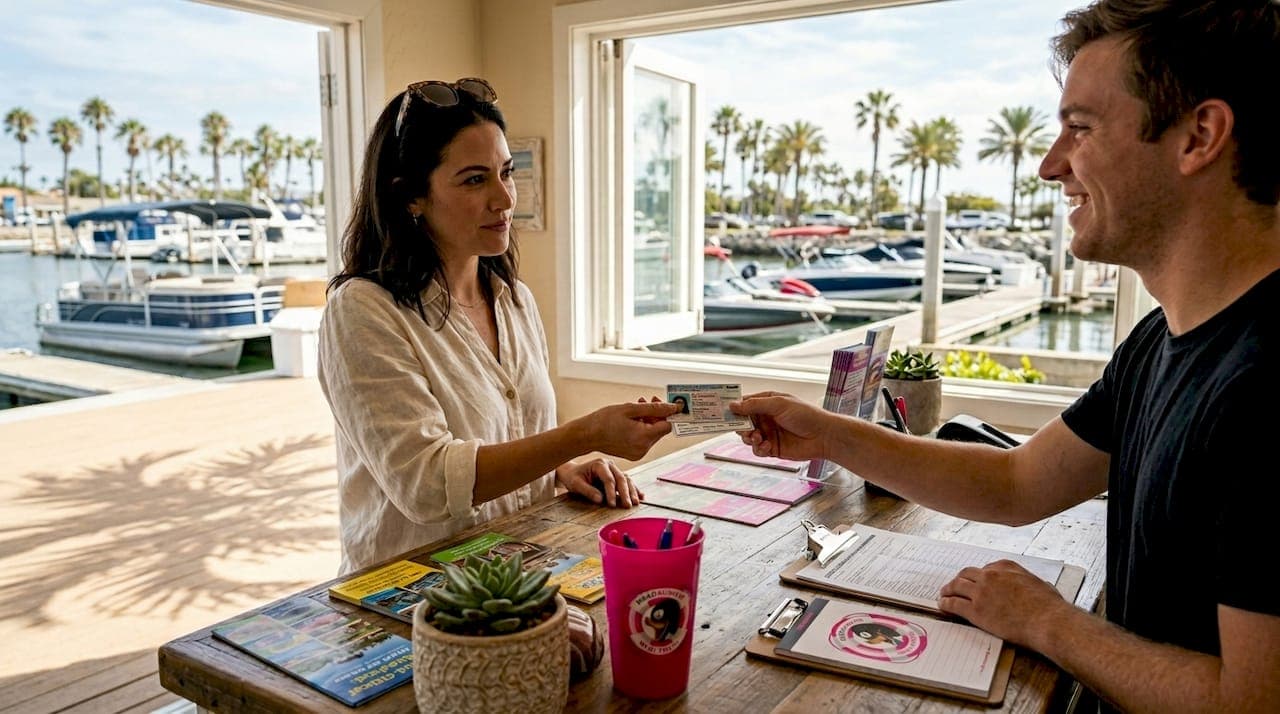
Planning a day on the water in South Florida is exciting. But figuring out what does boat rental ID require stops a lot of people before they even get to the dock. Most assume they need a traditional boating license, similar to a driver's license, but Florida doesn't work that way. The state has its own system built on education credentials rather than licenses, and rental companies layer their own requirements on top of that. Know what to bring before you show up and you'll spend your time on the water instead of standing at the counter trying to sort it out.
Table of Contents
- Key takeaways
- Florida's boating education ID card system explained
- What ID is needed for boat rental in Florida
- How to prepare your credentials before rental day
- Florida vs. other states: what non-residents should know
- Legal and safety consequences of missing required ID
- My take on the confusion around Florida boat rentals
- Rent with confidence through Roadrunnerboatrental
- FAQ
Key takeaways
| Point | Details |
|---|---|
| No traditional license required | Florida issues a Boating Safety Education ID Card, not a driving-style boating license. |
| Birthdate determines your requirement | If you were born on or after January 1, 1988, you must carry the education card to operate a 10+ HP vessel. |
| Rental companies need more than one document | Expect to show a government-issued photo ID, a credit card, and your education card or temporary certificate. |
| Non-residents are covered with NASBLA approval | Out-of-state boating safety cards from NASBLA-approved courses satisfy Florida's education requirement. |
| Call ahead to confirm | Rental policies vary, and confirming requirements before arrival prevents denied rentals on the day you planned to go. |
Florida's boating education ID card system explained
Here is where most people get confused. Florida does not issue a traditional boating license the way states issue a driver's license. Instead, the Florida Fish and Wildlife Conservation Commission (FWC) issues a Boating Safety Education ID Card that proves you completed an approved boating safety course. People call it a boating license in casual conversation, but it is education-based, not license-based. That distinction matters because it changes how you obtain it and what it proves.
Who actually needs this card
The requirement is triggered by two factors: your birthdate and the vessel's engine power. Operators born on or after January 1, 1988 must carry the Boating Safety Education ID Card when operating a motorized vessel of 10 horsepower or more. If you were born before that date, you are not legally required to carry the card, though many rental companies still encourage or require it as part of their own policies.
Here is what you need to know about getting the card:
- Complete an FWC-approved boating safety course. These are available online and typically take four to eight hours to finish.
- Pass the final exam to receive your course completion certificate.
- Submit the certificate to FWC to receive your permanent Boating Safety Education ID Card by mail.
- Carry the card on your person whenever you operate a qualifying vessel on Florida waters.
The permanent card itself can take several weeks to arrive after you pass the course. That is where the temporary certificate becomes critical.
A temporary certificate is valid for 90 days after course completion, and it serves as legal proof during that window. For visitors planning a one-time trip to South Florida, this is often the most practical route. You complete the course online before your trip, print or save the temporary certificate, and you are legal to operate the rental boat while you wait for the permanent card.
Pro Tip: Complete your NASBLA-approved boating safety course at least a week before your rental date. That gives you time to confirm the temporary certificate prints correctly and to contact FWC if anything goes wrong.
What ID is needed for boat rental in Florida
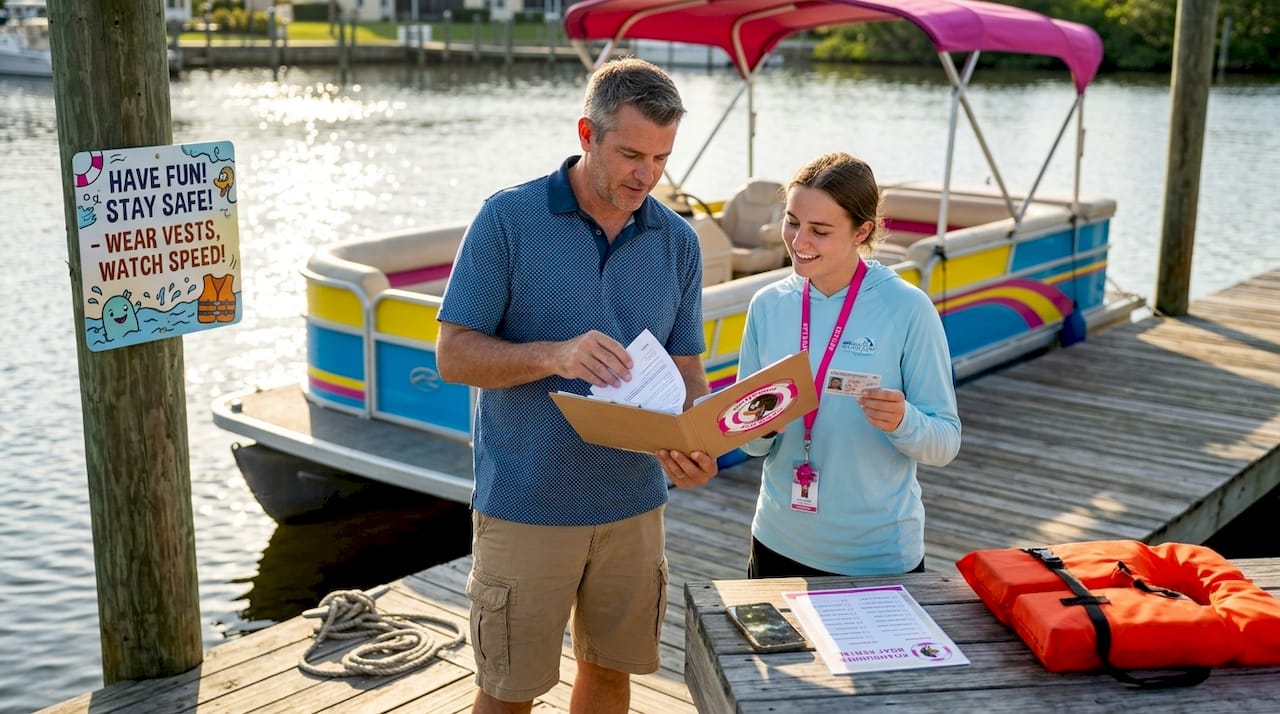
Beyond the Boating Safety Education ID Card, rental companies in Florida ask for additional documents to verify your identity and protect their equipment. Understanding the full boat rental identification requirements ahead of time keeps the check-in process smooth.
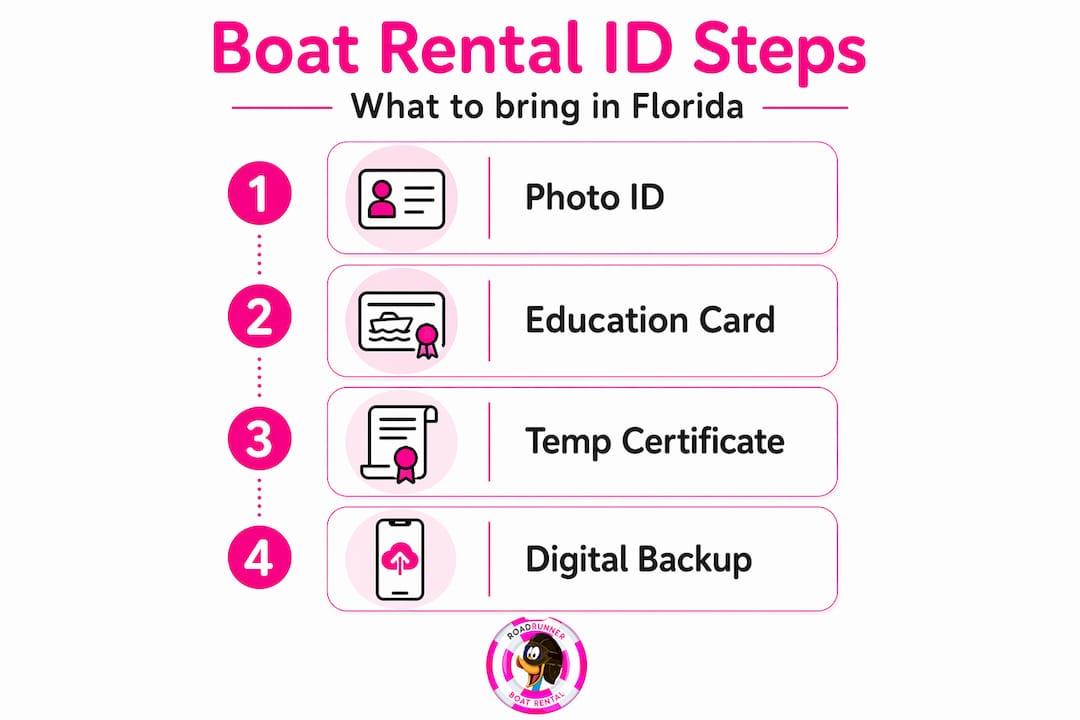
Here is what most Florida rental companies will ask for:
- Government-issued photo ID. A driver's license or passport is standard. This confirms your identity and your date of birth.
- Boating Safety Education ID Card or temporary certificate. Required if you were born on or after January 1, 1988 and plan to operate the vessel.
- Credit or debit card for a security deposit. Rental companies require a card on file to cover potential damages or fuel overages.
- Proof of minimum age. Renters must generally be at least 18 years old for most powerboats. Some higher-powered vessels require renters to be 21.
- Signed rental agreement. Rental agreements typically require listing all vessel operators and their credentials, along with signatures confirming you understand the safety and operational guidelines.
These documents for renting a boat work together. The photo ID confirms who you are. The education card confirms you know how to safely operate a motorized vessel. The credit card provides financial accountability. The signed agreement puts the rules in writing. Miss one of these and the rental company may turn you away regardless of how prepared you feel in every other way.
How to prepare your credentials before rental day
Getting your documents organized before you arrive makes a real difference. Here is a step-by-step approach that works for both first-timers and people who have rented before:
- Check your birthdate against the requirement. If you were born on or after January 1, 1988, you need the Boating Safety Education ID Card or a valid temporary certificate before you can legally operate a motorized rental boat in Florida.
- Verify your card or certificate is current. Temporary certificates expire after 90 days. Check the issue date and confirm it will still be valid on your rental date.
- Locate your government-issued photo ID. If your driver's license is expired, use a passport instead. Some rental companies will not accept expired identification.
- Confirm your credit card is active and has room for a deposit hold. Deposit holds can range from a few hundred dollars to more, depending on the vessel. Check your available credit before you go.
- Call the rental company in advance. Ask specifically what documents they require, whether they accept digital copies of the temporary certificate, and whether there are any additional forms to complete before arrival.
- Take the online boating safety course if you haven't already. NASBLA-approved courses completed online are widely accepted by rental companies and Florida authorities, including those completed by out-of-state visitors.
Pro Tip: Save a digital copy of your temporary certificate on your phone and email yourself a backup. If the printed version gets wet or damaged on the water, you will have a copy accessible instantly.
Planning your South Florida boat day gets a lot easier once credentials are sorted. That checklist covers everything else you'll want to bring alongside your paperwork.
Florida vs. other states: what non-residents should know
Florida's approach to boating credentials is different enough from other states that non-residents often arrive with the wrong assumptions. Here is how Florida compares to common requirements elsewhere:
| State/Region | Credential Type | Age Requirement | Reciprocity with Florida |
|---|---|---|---|
| Florida | Boating Safety Education ID Card (FWC) | 18 minimum to rent (most vessels) | N/A (home state) |
| California | Boater Card (phased rollout by age) | 16+ to operate some vessels | Accepted if NASBLA-approved |
| New York | Safe Boating Certificate | 14+ to operate with restrictions | Accepted if NASBLA-approved |
| Michigan | Safety Certificate required under age 26 | Varies by vessel and age | Accepted if NASBLA-approved |
| Texas | Boater Education Certificate | 13+ in some contexts | Accepted if NASBLA-approved |
The single most important thing for non-residents to know: out-of-state NASBLA-approved boating safety certificates generally satisfy Florida's education credential requirement. If you completed a boating safety course in another state through an NASBLA-approved provider, you do not need to redo the course in Florida. Bring that card with your photo ID and most rental companies will accept it.
Tourists who have never taken any boating safety course need to complete one before their trip. Online NASBLA-approved courses can be finished in a single day from a laptop or phone, and the temporary certificate you receive is valid immediately. Planning ahead is especially important for renters born after January 1, 1988, because the permanent card takes weeks to arrive and the temporary certificate covers only 90 days.
Legal and safety consequences of missing required ID
Skipping the credentials is not just a paperwork problem. It creates real legal and financial exposure.
"Boat renters without correct credentials risk fines, citation, insurance denial, and possible rental refusal from the company."
Florida Fish and Wildlife officers actively patrol waterways and check for compliance. If you are stopped on the water and cannot produce your Boating Safety Education ID Card when required, you can receive a citation on the spot. Beyond the fine, a violation can affect your ability to rent from companies that run background checks on your boating record.
The insurance angle often catches people off guard. If you are in an accident while operating without your required credentials, your rental company's insurance may not cover damages. That means you could be personally responsible for repairs to the vessel, injuries to passengers, or damage to other boats. The education card is not just about passing an exam. It legally establishes that you had the training to operate that vessel safely.
Rental companies also take the boat rental ID check seriously for liability reasons. Renting to someone who lacks required credentials exposes them to legal risk. Rental operators confirm credentials before handing over keys, not after. Showing up without the right documents means the rental does not happen, no matter how far you drove to get there.
My take on the confusion around Florida boat rentals
I've had conversations with first-time renters who drove three hours to rent a boat only to find out at check-in that their credentials weren't in order. The frustration in that moment is completely avoidable, and it almost always comes from the same source: the phrase "boating license."
When people search for what ID is needed for boat rental in Florida, they expect an answer similar to renting a car. Show your license and you're done. But Florida's system doesn't work that way, and the informal use of the word "license" to describe the Boating Safety Education ID Card creates a genuine misunderstanding. People assume they either already have it or that it doesn't apply to them.
In my experience, the renters who have the smoothest time are the ones who called ahead, confirmed the specific requirements for the boat they booked, and completed their education course with enough lead time to have the temporary certificate in hand. The process is genuinely not complicated once you understand it. The confusion comes from not knowing the difference between a traditional license and an education-based credential.
Boating education also makes you a better operator on the water. The FWC course covers things like right-of-way rules, navigation markers, and what to do in emergencies. That knowledge matters when you're piloting a boat through the Intracoastal or toward a sandbar with other boats around you.
Take the course, gather your documents, and confirm with your rental company. You'll arrive ready to enjoy the water instead of troubleshooting at the counter.
— Cristiano
Rent with confidence through Roadrunnerboatrental
At Roadrunnerboatrental, we make the requirements for boat rental clear from the start so you show up ready and spend your day on the water, not sorting through paperwork.
When you book a Boca Raton boat rental with us, we walk you through exactly what to bring: your government-issued photo ID, your Boating Safety Education ID Card or valid temporary certificate, and a credit card for the deposit. Whether you're after a relaxed pontoon day on Lake Boca, a party boat outing at the sandbar, or an Intracoastal cruise, we have clean and reliable boats ready for you. Our booking process is direct, our requirements are transparent, and our team answers questions before you arrive. Ready to get on the water? Reserve your boat today and know that everything is in order from the moment you dock with us.
FAQ
What does boat rental ID require in Florida?
Florida boat rental companies require a government-issued photo ID, a Boating Safety Education ID Card (for those born on or after January 1, 1988), and a credit card for a security deposit. All operators listed on the rental agreement must meet these requirements.
Do I need an ID for boat rental if I was born before 1988?
If you were born before January 1, 1988, Florida does not legally require you to carry the Boating Safety Education ID Card. However, individual rental companies may still require it as part of their own policies, so always confirm with the company in advance.
Can I use an out-of-state boating certificate to rent in Florida?
Yes. Non-residents who hold a valid NASBLA-approved boating safety certificate from another state generally meet Florida's education credential requirements. Present it alongside your government-issued photo ID at the time of rental.
What happens if I show up without the required documents?
Rental companies perform a boat rental ID check before handing over the vessel. If you are missing required credentials, the rental will be denied. On the water, operating without your required card can result in a citation, fines, and potential loss of insurance coverage.
How do I get my Boating Safety Education ID Card before a Florida trip?
Complete a NASBLA-approved boating safety course online, then receive a temporary certificate valid for 90 days. Submit your completion certificate to the FWC to receive the permanent card by mail, which typically takes several weeks.