
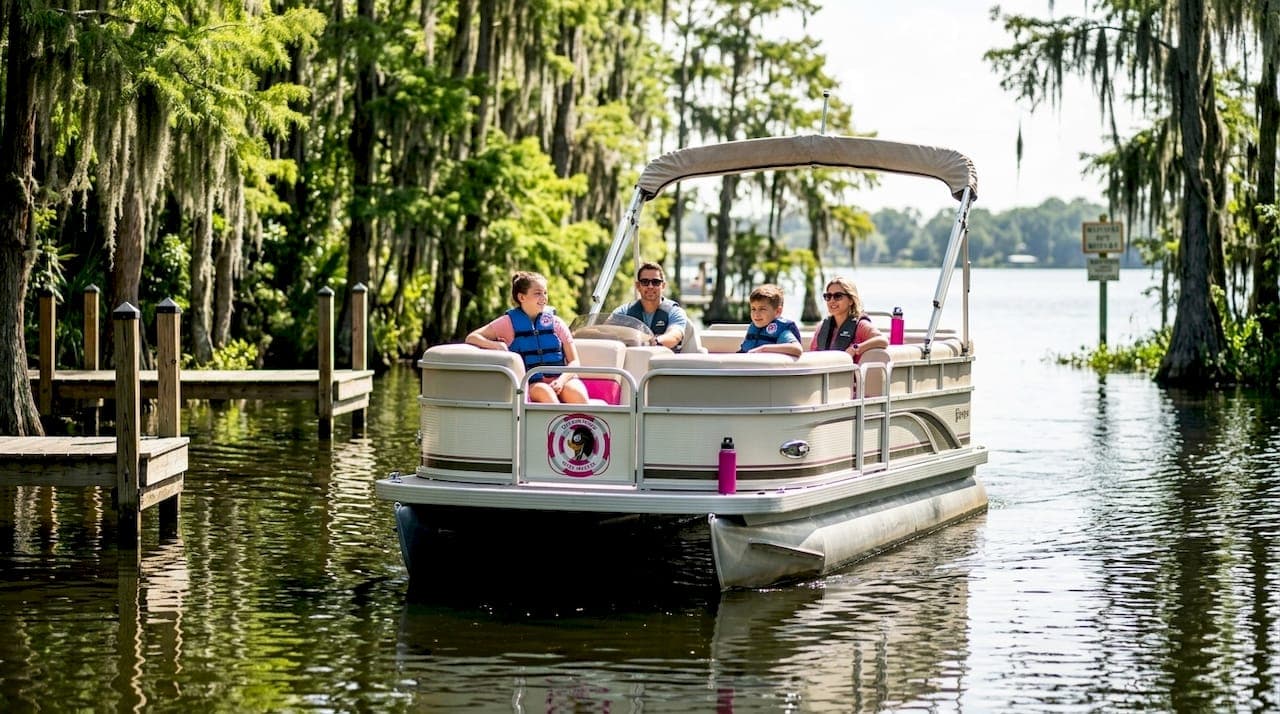
Pontoon boating rules in Florida cover everything from mandatory education cards to life jacket laws, speed zones, and registration requirements that every operator must know before leaving the dock. Whether you are renting a pontoon for a Lake Boca afternoon or buying your first boat, Florida's regulations apply the moment you fire up a motor above 10 HP. Skipping these rules does not just risk a citation. It puts passengers in real danger. This guide breaks down the most critical rules in plain language so you can spend more time enjoying South Florida waterways and less time worrying about what you missed.
1. Florida's pontoon boating rules start with education
Florida law requires anyone born on or after January 1, 1988 who operates a motorized vessel with 10 HP or more to carry a Boating Safety Education ID Card plus a valid photo ID. This is not a traditional driver's license. The Boating Safety Education ID Card is issued by the Florida Fish and Wildlife Conservation Commission (FWC) after completing a NASBLA-approved course, and it is valid for life once earned.
Most pontoon rentals come with motors well above 10 HP, which means the education requirement almost certainly applies to you. Confirming the motor size before you rent is a smart first step. If you were born before January 1, 1988, you are exempt from carrying the card, though operating safely and legally still applies. Operators from other states with equivalent boating education credentials may qualify for reciprocity under Florida law.
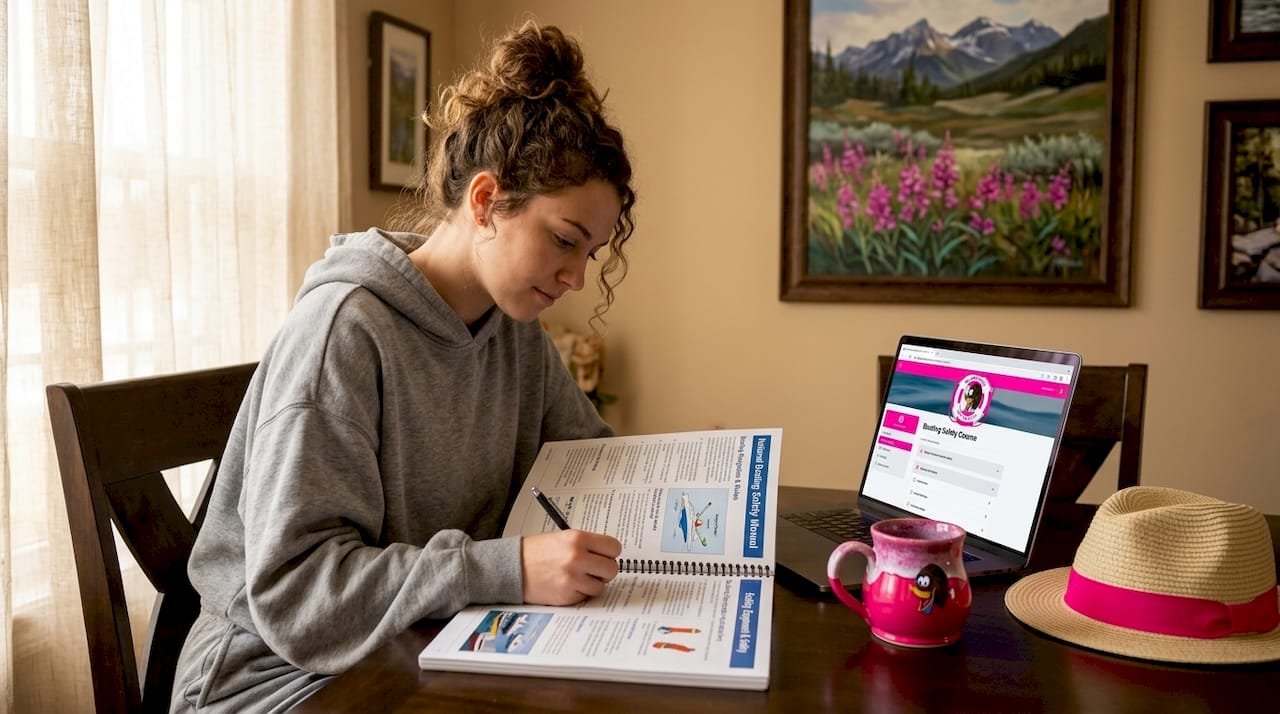
Pro Tip: Complete your NASBLA-approved course online through providers like Boat Ed before your trip. The card arrives by mail and you carry it permanently, so there is no need to repeat the process.
Rental facilities are legally required to provide pre-rental safety instruction from qualified personnel before handing over the keys. This means your rental company should walk you through the basics, but that briefing does not replace your education card requirement if you fall under the 1988 rule.
2. Life jacket laws every pontoon passenger needs to know
Florida's life jacket rules are specific and non-negotiable. Children under 6 must wear a U.S. Coast Guard-approved life jacket at all times while aboard any vessel under 26 feet. Adults and older children must have an approved life jacket accessible onboard, though they are not required to wear one unless operating a personal watercraft.
The safety case behind this law is stark. 72% of drowning victims in Florida boating accidents were not wearing life jackets at the time of the incident. That number makes the law feel less like bureaucracy and more like common sense. FWC urges pre-departure readiness with life jackets accessible and properly fitted before the boat leaves the dock.
Here is what proper compliance looks like on a pontoon:
- Every child under 6 wears a fitted, USCG-approved life jacket for the entire trip.
- Every passenger 6 and older has an approved life jacket within arm's reach.
- Boats 16 feet and longer carry at least one throwable flotation device such as a ring buoy or cushion.
- Life jackets are stored where passengers can access them quickly, not buried under gear.
- Personal watercraft riders wear their life jackets regardless of age.
Pro Tip: Check the label inside each life jacket before departure. USCG approval and the correct weight range for each passenger must match. An ill-fitting jacket provides almost no protection in an emergency.
For families renting pontoons, the Florida boat rental age requirements page from Roadrunnerboatrental covers life jacket rules alongside age-based regulations in detail.
3. How speed and wake zone rules affect your pontoon trip
Florida enforces speed and wake zones through posted markers on the water, and no wake means no visible wake produced by your vessel, regardless of what your speedometer reads. This distinction catches many operators off guard. You cannot simply slow to a posted number and assume you are compliant. You must visually confirm that your boat is producing zero wake.
Wake zone compliance depends on throttle control and engine output, not just recorded speed. Treating a no-wake zone as an idle-throttle zone is the safest and most legally defensible approach. Pontoon boats, because of their wide flat hulls, can still push a noticeable wake at low speeds if the throttle is not fully reduced.
| Zone type | What it means | How to comply |
|---|---|---|
| No wake zone | Zero visible wake allowed | Idle throttle only |
| Slow speed zone | Minimum speed to maintain steerage | Proceed slowly, no wake |
| Posted speed limit | Maximum speed in MPH | Stay at or below posted limit |
| Manatee zone | Reduced speed to protect wildlife | Follow posted seasonal markers |
Speed zones vary by location, season, and local ordinance. Residential canals, marina approaches, and manatee protection areas near Boca Raton and the Intracoastal Waterway carry their own specific rules. Watching for posted markers before entering any new stretch of water is the most reliable way to stay legal.
4. Registration and required equipment for Florida pontoon boats
Every motorized vessel in Florida must be registered with the FWC unless it qualifies for a specific exemption. Registration documents must be kept aboard the vessel and presented during any inspection. For renters, the rental company holds the registration and provides a copy for your trip. For owners, missing paperwork during spot checks is one of the most common enforcement issues FWC officers encounter.
Beyond registration, Florida law mandates specific safety equipment based on vessel size. A pontoon in the 16 to 26 foot range, which covers most rental and recreational models, requires the following:
- One USCG-approved wearable life jacket per person aboard
- At least one throwable flotation device
- A sound-producing device such as a horn or whistle
- Visual distress signals for boats operating on coastal or open waters
- A working fire extinguisher if the vessel has an enclosed engine compartment
Building a departure checklist that includes your education ID, photo ID, registration copy, and all required safety gear takes about five minutes and eliminates the most common reasons for citations. Roadrunnerboatrental's boat rental ID requirements guide explains exactly what documents renters need to carry.
5. Special rules for personal watercraft and pontoon party boats
Personal watercraft (PWC) such as Jet Skis operate under stricter rules than standard pontoons. Anyone under 14 cannot legally operate a PWC in Florida, and rental facilities require operators to be at least 18. PWC riders must wear a life jacket at all times and attach the engine cutoff switch lanyard to their body before operating. Ignoring the lanyard rule is a primary enforcement target for FWC officers on busy South Florida waterways.
Pontoon party boats, which are larger pontoons configured for group gatherings, fall under the same Florida boating regulations as standard pontoons but face additional scrutiny around capacity and noise. Every vessel has a posted maximum capacity that operators must respect. Overloading a pontoon is both illegal and genuinely dangerous, since the flat hull design loses stability quickly when weight limits are exceeded.
Noise ordinances also apply on Florida waterways. Excessive engine noise, loud music near residential areas, and disruptive behavior can result in citations from FWC or local marine patrol. The federal inland navigation rules incorporated into Florida state law also govern right-of-way situations, meaning pontoon operators must yield correctly to other vessels, including sailboats and vessels with limited maneuverability.
For ideas on how to plan a great day within these rules, the top pontoon activities guide from Roadrunnerboatrental covers sandbar stops, Intracoastal cruising, and family-friendly options across South Florida.
Key takeaways
Florida pontoon boating compliance requires a valid education card, proper life jackets for all ages, throttle discipline in wake zones, and complete onboard documentation before departure.
| Point | Details |
|---|---|
| Education card requirement | Operators born after Jan 1, 1988 must carry a Boating Safety Education ID Card for vessels 10 HP or more. |
| Life jackets for children | Children under 6 must wear a USCG-approved life jacket at all times on vessels under 26 feet. |
| No-wake zone compliance | Idle throttle is the only reliable way to produce zero wake and stay legal in posted zones. |
| Onboard documentation | Registration, education ID, and photo ID must be aboard and accessible during any FWC inspection. |
| PWC age restrictions | Personal watercraft cannot be operated by anyone under 14, and rentals require operators to be 18 or older. |
What I've learned from years on Florida waterways
Most people who get cited on Florida waters are not reckless. They are simply underprepared. The education card requirement catches renters off guard more than any other rule, especially when they assume the rental briefing covers their legal obligation. It does not. The card and the briefing are two separate things, and FWC officers know the difference immediately.
Wake zones are the second most common problem I see. Operators slow down visually but do not fully drop to idle, and the boat still pushes a small but visible wake through a residential canal. That is a citation waiting to happen. The rule is not about speed. It is about the water behind you.
The life jacket situation on party pontoons is where I get most concerned. Adults wave off the jackets because they feel confident in the water, but the FWC drowning data tells a different story. A pontoon carrying eight adults with only two accessible life jackets is not just illegal. It is a serious risk if something goes wrong quickly.
My honest advice: treat the pre-departure checklist as the most important five minutes of your day on the water. Education card, photo ID, registration, life jackets counted and fitted, throwable device visible, fire extinguisher checked. Do that every time and you will never have a bad day for the wrong reasons.
— Cristiano
Get out on the water the right way with Roadrunnerboatrental
Roadrunnerboatrental makes Florida pontoon compliance straightforward for renters and first-timers. Every pontoon rental in Boca Raton comes fully equipped with USCG-approved life jackets, required safety gear, and onboard registration so you are legal from the moment you leave the dock. The team walks every renter through Florida's boating rules before departure, covering education card requirements, wake zone expectations, and capacity limits in plain language. Whether you are planning a family outing on Lake Boca, a sandbar trip along the Intracoastal, or a birthday celebration on the water, book your rental directly and get on the water with confidence.
FAQ
Do you need a boating license to rent a pontoon in Florida?
Florida does not issue a traditional boating license. Anyone born on or after January 1, 1988 who operates a vessel with 10 HP or more must carry a Boating Safety Education ID Card plus photo ID, which is obtained after completing a NASBLA-approved course.
What life jacket rules apply to kids on a pontoon boat?
Children under 6 must wear a USCG-approved life jacket at all times while aboard any vessel under 26 feet in Florida. All other passengers must have an approved life jacket accessible onboard.
What does "no wake" actually mean in Florida?
No wake means your vessel must produce zero visible wake, not just travel below a certain speed. FWC officers assess the water behind your boat, so idle throttle is the only reliable way to comply in posted no-wake zones.
What documents must be onboard a Florida pontoon boat?
Florida requires the vessel registration, the operator's Boating Safety Education ID Card if applicable, and a valid photo ID to be aboard and accessible during any inspection. Rental operators provide the registration copy as part of the rental package.
Can a 16-year-old operate a rental pontoon in Florida?
A 16-year-old with a valid Boating Safety Education ID Card can operate a privately owned pontoon in Florida, but rental facilities require operators to be at least 18 years old. Personal watercraft rentals require operators to be 18 regardless of education status.