
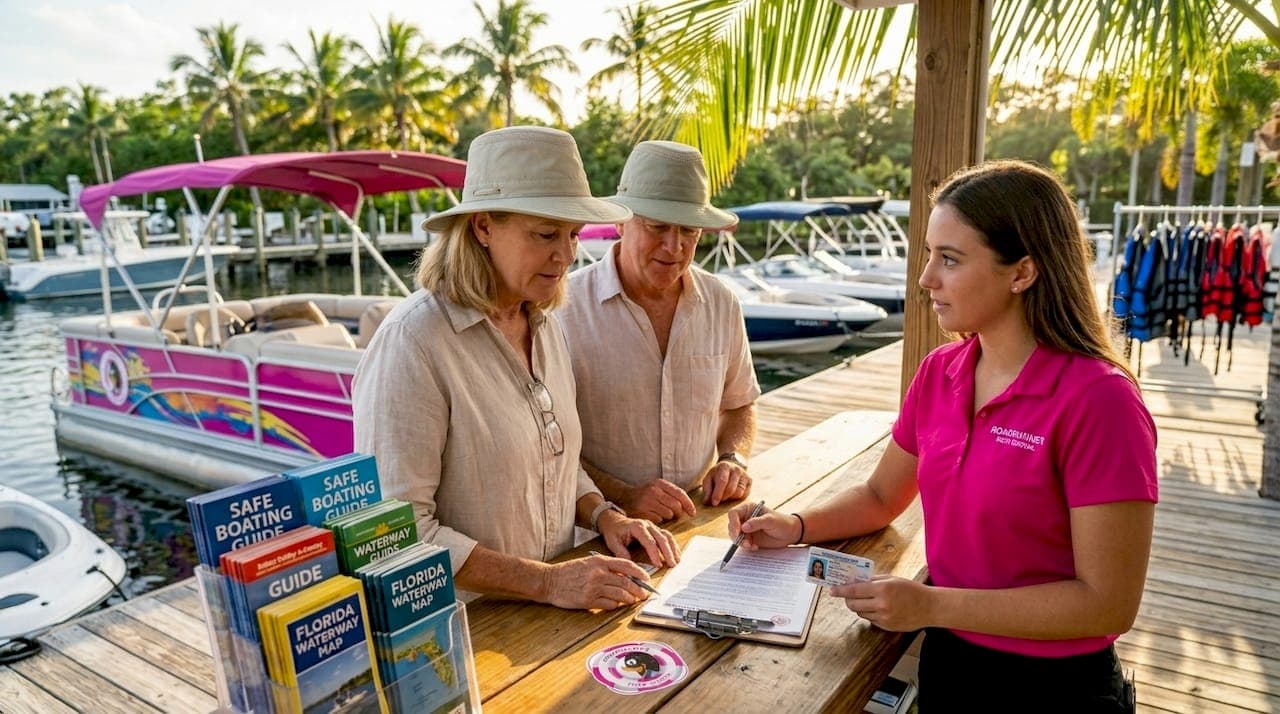
Planning a boat rental in Florida and not sure if you qualify? Florida's boat rental age requirements are more layered than most people expect, and confusing them can get your reservation rejected at the dock. The legal minimum age to operate a personal watercraft differs from the minimum rental age, boating safety education rules apply to a broad range of operators, and a brand-new 2026 helmet law changes the game for anyone under 18 on a jet ski. This guide breaks down every age threshold, education requirement, and policy consideration you need before you book.
Table of Contents
- Key takeaways
- 1. Boat rental age requirements in Florida by vessel type
- 2. Florida's boating safety education requirements
- 3. New 2026 helmet requirements for under-18 PWC operators
- 4. How rental company policies compare to Florida law
- 5. How to prepare your documentation before renting
- My honest take after years around Florida boat rentals
- Rent with confidence at Roadrunnerboatrental
- FAQ
Key takeaways
| Point | Details |
|---|---|
| PWC rental minimum age | You must be at least 18 years old with a valid photo ID to rent a personal watercraft in Florida. |
| Boater education card required | Anyone born on or after January 1, 1988, must carry a Florida Boating Safety Education ID card to operate a motorized vessel. |
| Company rules often stricter | Many Florida rental companies require renters to be 21 or older, regardless of what state law says. |
| 2026 helmet law for under-18 | As of January 1, 2026, all PWC operators under 18 must wear an approved helmet while riding. |
| Preparation prevents problems | Bringing the right ID, education proof, and safety gear before arrival saves you from being turned away. |
1. Boat rental age requirements in Florida by vessel type
Florida does not have one universal age rule that covers every boat rental situation. The requirements split by vessel type, and the gap between the legal operating age and the actual rental age catches a lot of people off guard.
For personal watercraft (jet skis), the minimum PWC rental age is 18 years old, and you must present a valid photo ID at the time of rental. That rule is firm across the state. Separately, Florida law sets the minimum age to operate a PWC at 14, but that only applies when a minor is riding under supervision on someone else's rental. No operator under 14 may touch the controls under any circumstances.
For standard motorboats, the legal floor is generally 18, but many companies push that to 21. Sailboats and pontoons follow similar patterns, with rental company discretion carrying more weight than any single state statute.
- Personal watercraft (jet ski): Minimum rental age 18; minimum operating age 14 with supervision
- Motorboats and pontoons: Minimum rental age 18 to 21 depending on company policy
- Charter and captained vessels: Age restrictions are set by the vessel operator, often no minimum for passengers
- Passengers of any age: Allowed on most vessels with proper Personal Flotation Device (PFD) equipment
Pro Tip: Call the rental company before booking if anyone in your group is between 18 and 20. Some Florida rental operators require a credit card from a renter who is 21 or older, even if the primary operator meets the legal age threshold.
2. Florida's boating safety education requirements
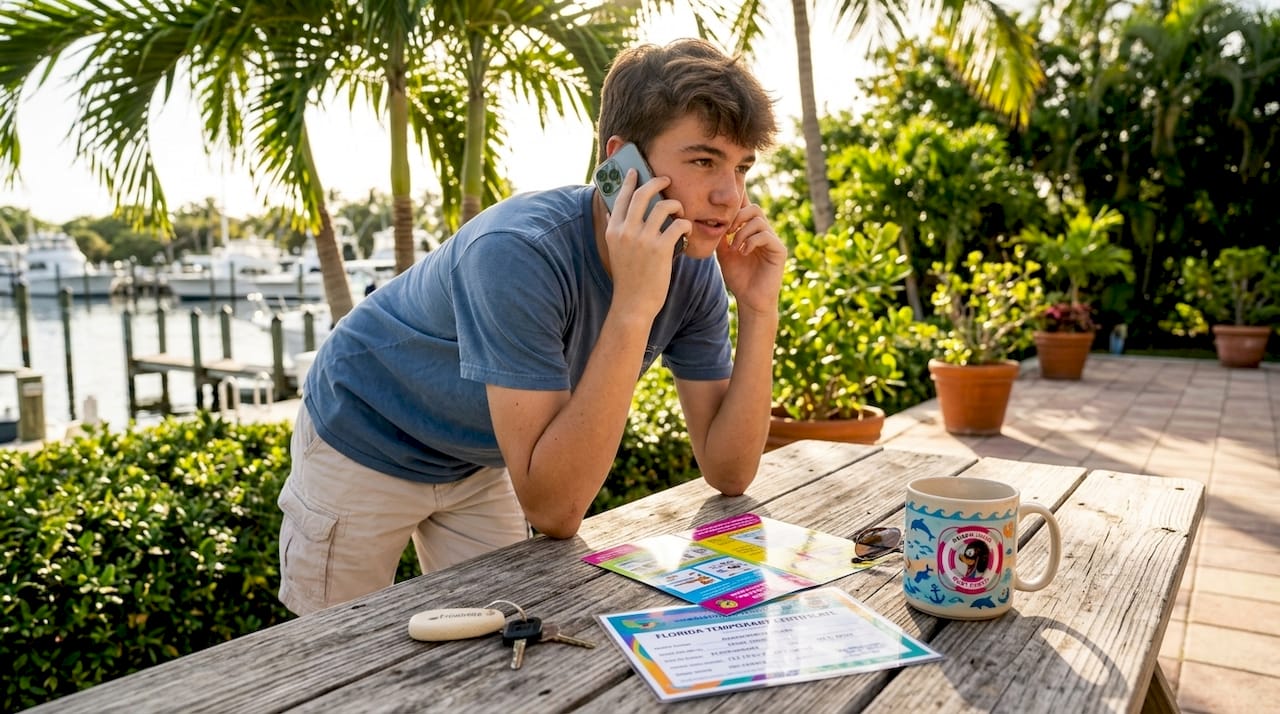
Florida does not issue a traditional boating license. Instead, it uses a Boating Safety Education ID card system, and many renters arrive at the dock without knowing they are legally required to carry one.
The rule applies to anyone born on or after January 1, 1988, who operates a vessel with 10 horsepower or greater. That covers virtually every rental boat on Florida's waterways. The card is earned by completing a Florida-approved boating safety course, either online or in person.
Here is what you need to know before your rental day:
- Who needs it: Anyone born on or after January 1, 1988, operating a motor-powered rental vessel
- Exempt operators: People born before January 1, 1988, do not need the card
- Supervised exception: Minors aged 14 to 17 may operate a PWC on a rental if directly supervised by a card-holding adult on board
- Course options: Approved courses are available online and typically take four to six hours to complete
- Card vs. temporary certificate: After passing the course, you receive a 90-day temporary certificate while your permanent card is mailed
That temporary certificate is a detail worth paying close attention to. Boaters relying on a temporary certificate must track the expiration date carefully, since rentals commonly require an active, unexpired document. If your card is in the mail but your certificate expired last week, you will not be allowed to rent.
Pro Tip: Take the boating safety course at least two weeks before your trip. That window covers course completion, certificate issuance, and some buffer in case the permanent card arrives before you need it. The course costs around $35 online and the knowledge carries real value on the water.
Most rental operators will check your ID and your education card during the pre-rental orientation. Some companies, including those offering self-drive rentals in Boca Raton, walk every renter through a safety briefing and verify credentials before handing over keys. Do not assume you can skip this step or figure it out at the dock.
3. New 2026 helmet requirements for under-18 PWC operators
Florida updated its personal watercraft laws at the start of 2026, and the change is significant for any family or group that includes operators under 18.
As of January 1, 2026, all PWC operators under the age of 18 are required to wear a Coast Guard-approved helmet while operating a jet ski or similar personal watercraft. This is not a recommendation. It is a legal requirement, and rental companies are responsible for enforcing it.
Here is how the full set of under-18 PWC regulations breaks down:
- Helmet requirement: Operators under 18 must wear an approved helmet at all times while operating a PWC
- PFD requirement: All PWC riders, regardless of age, must wear a properly fitting U.S. Coast Guard-approved life jacket
- Operating hours: PWCs may only be operated between sunrise and sunset. No night operation is permitted under any circumstances
- Minimum operating age: No one under 14 years old may operate a PWC, even with adult supervision
- Supervision rule: Operators aged 14 to 17 may ride only if supervised by an adult on board who holds a valid Florida Boating Safety Education ID card
Rental companies in Florida are required to provide helmets for young operators or confirm that renters bring their own. If you are planning a family trip that includes a teenager on a jet ski, contact the rental company ahead of time to confirm helmet availability and sizing.
The helmet and PFD requirements reflect a genuine reduction in injury risk for young operators. Head injuries on PWCs are disproportionately common in the under-18 group, and enforcement has increased accordingly. This is not bureaucratic paperwork. It is a rule built around real crash data.
4. How rental company policies compare to Florida law
Here is the gap that causes the most booking problems: state law sets a floor, and rental companies are allowed to build a ceiling above it. A company can legally require a 25-year-old minimum renter even though Florida law says 18. Most do not go that high, but 21 is common.
| Vessel type | Florida legal minimum | Typical rental company minimum |
|---|---|---|
| Personal watercraft | 18 years old | 18 to 21 years old |
| Motorboat (under 26 ft) | 18 years old | 18 to 21 years old |
| Pontoon / deck boat | 18 years old | 21 years old |
| Large or high-power boats | 18 years old | 21 to 25 years old |
Rental companies in Florida often require renters to be at least 21, and that policy is driven mostly by liability and insurance requirements, not state statute. Younger renters sometimes find that even if they meet the age cutoff, they face a larger security deposit or a requirement to provide a credit card in their own name.
Beyond age, here is what rental operators typically ask for at check-in:
- Valid government-issued photo ID showing date of birth
- Florida Boating Safety Education ID card (or valid temporary certificate)
- Credit card in the renter's name for the security deposit
- Signed liability waiver
The smartest move is to read the rental company's terms and conditions before you click "book." Age policies, deposit amounts, and education card requirements should all be listed. If they are not, call and ask directly.
5. How to prepare your documentation before renting
Showing up ready saves time and avoids last-minute stress. Here is a practical sequence for getting everything in order before your rental day.
- Confirm your age qualifies. Check the specific rental company's policy, not just Florida state law. If you are 18 to 20, call ahead to confirm you are eligible.
- Complete your boating safety course. Take a Florida-approved online course well before your trip. You will receive a temporary certificate immediately after passing.
- Track your certificate expiration. The temporary certificate is valid for 90 days. If your trip falls near that deadline, contact the Florida Fish and Wildlife Conservation Commission about expediting your permanent card.
- Gather your ID documents. Bring a valid, unexpired government-issued photo ID. A driver's license works perfectly.
- Arrange safety gear for minors. If anyone under 18 will operate a PWC, confirm that helmets and properly sized PFDs are available through the rental company or bring your own.
- Review the rental company's check-in process. Most companies run a brief safety orientation on-site. Plan to arrive 15 minutes early.
Pro Tip: Photograph your boating education card and temporary certificate and store them in your phone's photos app. If the physical documents get wet or lost on the water, you still have proof of compliance and can show the images at check-in or to a marine patrol officer.
For families traveling with kids who want to explore South Florida's waterways, review family-friendly boat trip routes ahead of time so you can match your rental type and duration to what the group can handle safely. Knowing the route also helps you plan for the sunrise-to-sunset PWC operation window if personal watercraft are part of the outing.
My honest take after years around Florida boat rentals
I have seen a lot of people walk up to a rental dock genuinely surprised. They assumed they needed a license, spent weeks trying to find one, and then discovered Florida does not issue one. Or they assumed any adult could jump on a jet ski, only to find out their 17-year-old cannot operate without supervision and now needs a helmet, and the company did not have helmets in stock.
The friction almost always comes from one of two places: the gap between state law and company policy, or the details inside PWC-specific rental and regulatory rules that read like a second set of rules entirely. Standard boats and PWCs genuinely operate under different frameworks in Florida, and treating them the same is the fastest path to a ruined trip.
What I tell people is this: the preparation takes about two hours total. Complete the online boating safety course, get your ID sorted, call the rental company to confirm their specific age and deposit policies, and arrange helmet logistics if minors are involved. Two hours of admin prevents a full day of disappointment.
The 2026 helmet law is worth taking seriously beyond just compliance. Head injuries on personal watercraft are genuinely dangerous, and the law reflects years of injury data. If you are booking for a teenager, treat the helmet requirement as a feature, not a burden.
— Cristiano
Rent with confidence at Roadrunnerboatrental
At Roadrunnerboatrental, the team is upfront about age requirements, education card verification, and safety gear from the moment you book. Whether you are planning a relaxed Lake Boca cruise, a sandbar trip with friends, or a family day on the Intracoastal, the boats are clean, the check-in process is straightforward, and the staff walks every renter through a safety orientation before departure. Renters who have questions about age eligibility or documentation are encouraged to reach out before booking so nothing slows you down at the dock. Reserve your boat now and spend your energy planning the fun, not the paperwork.
FAQ
What is the minimum age to rent a boat in Florida?
The minimum age to rent a personal watercraft in Florida is 18, and you must show a valid photo ID. For other motorboats, the legal minimum is also 18, but many rental companies require renters to be 21 or older.
Do you need a boating license to rent a boat in Florida?
Florida does not issue a traditional boating license. Instead, anyone born on or after January 1, 1988, who operates a motorized vessel must carry a Florida Boating Safety Education ID card earned by completing an approved safety course.
Can a 16-year-old drive a jet ski on a rental in Florida?
A 16-year-old cannot rent a jet ski in Florida since the rental minimum age is 18. They can operate one legally if supervised by an adult on board who holds a valid Florida Boating Safety Education ID card, and as of 2026, they must wear an approved helmet.
How long does it take to get a Florida boating safety education card?
You can complete an approved online course in roughly four to six hours and receive a temporary certificate immediately. The permanent card arrives by mail within a few weeks. The temporary certificate is valid for 90 days and accepted by rental companies as proof of completion.
Can passengers of any age ride on a rental boat in Florida?
Yes, passengers of any age are generally allowed on rental boats as long as they wear a properly fitting U.S. Coast Guard-approved life jacket. Age restrictions apply to operators, not passengers, though rental companies may have their own policies for very young children.